
Cooking for your dog every single day gets old fast. I know because I’ve done it — standing over the stove at 6 a.m. making chicken while my own coffee went cold. A solid homemade dog food meal prep routine fixes that: one cooking session a week, portioned containers, and you’re done.
This 7-day plan is built around balance and sanity. It rotates proteins so your dog isn’t eating the same thing for weeks, it keeps the cooking to a single weekend session, and it includes the unglamorous but critical part — making sure the food is actually nutritionally complete. Let’s get into it.
The 7-Day Meal Prep Plan
Day 1–2: Chicken, Rice & Vegetables
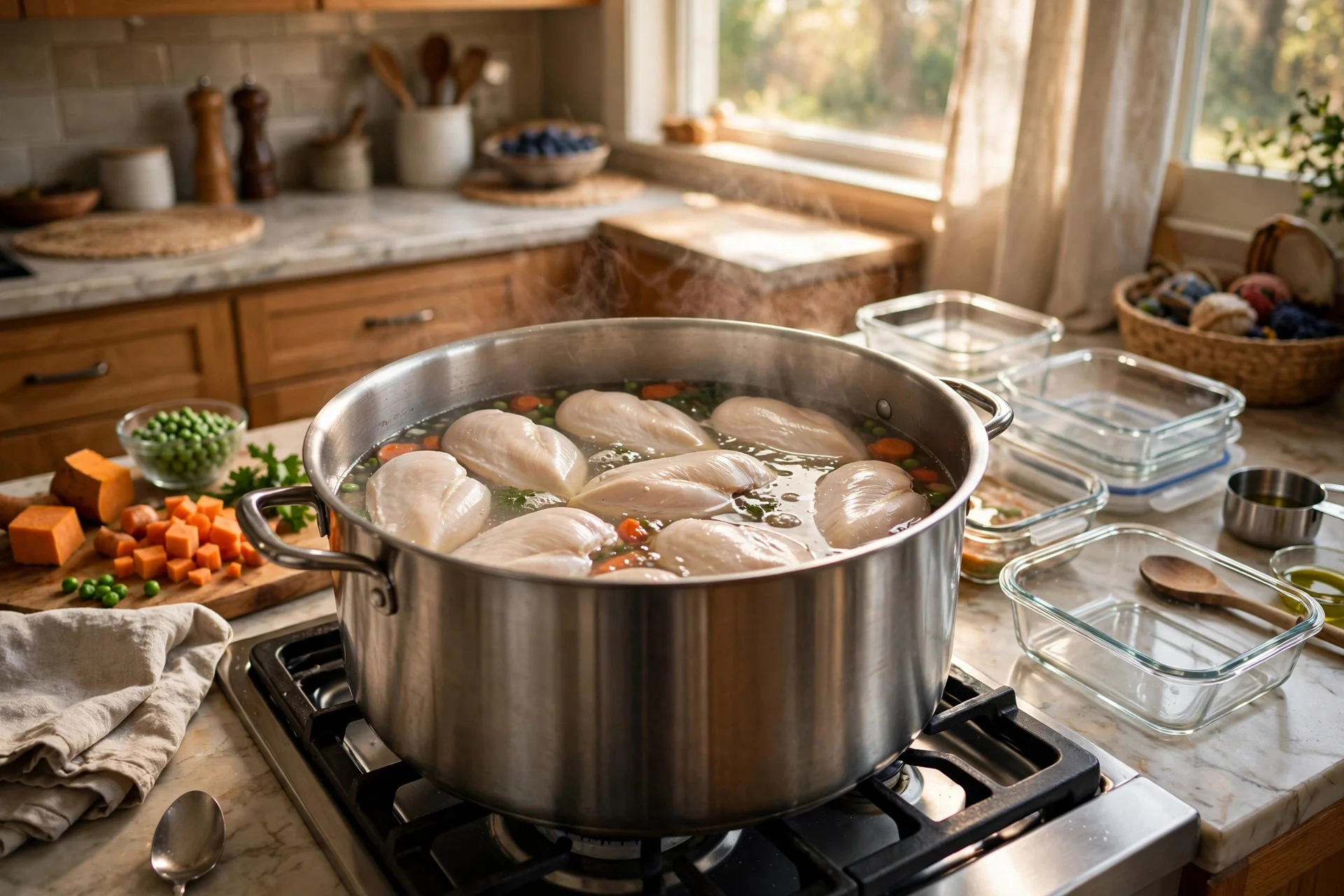
Poach four boneless, skinless chicken breasts in plain water (165°F internal), shred them, and mix with four cups of cooked brown rice and two cups of mixed steamed vegetables — carrots, green beans, and peas are all solid choices. No seasoning, no oil. This is your workhorse base: familiar, digestible, and easy to portion. Divide into four meal containers (two days of two meals) and refrigerate.
Day 3–4: Turkey, Sweet Potato & Spinach
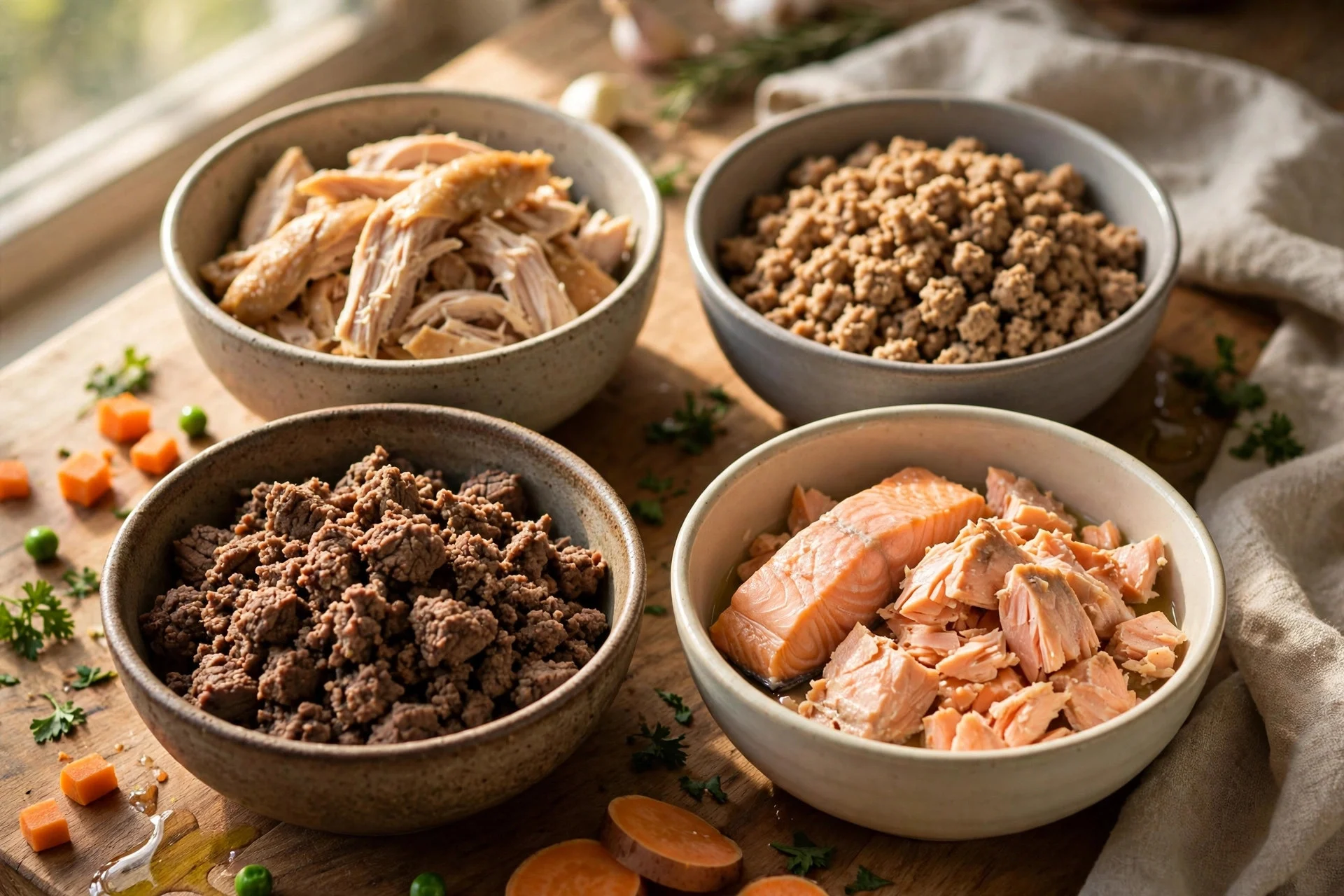
Brown two pounds of lean ground turkey, drain all fat, and combine with three cups of mashed plain sweet potato and two cups of lightly steamed chopped spinach. Sweet potato brings fiber and beta-carotene; spinach adds iron and vitamins. The different protein keeps things interesting for your dog and reduces the risk of developing a sensitivity from eating one protein exclusively. Portion into four containers.
Day 5: Beef, Oatmeal & Carrots
Use the leanest ground beef you can find, brown it thoroughly, drain the fat completely, and mix with three cups of cooked plain oatmeal and two cups of diced steamed carrots. Oatmeal is a gentle, slow-digesting grain that works well in rotation with rice. This is a two-meal day — slightly richer than the poultry days, which is fine in rotation but not something I’d feed every single day.
Day 6: Whitefish, Potato & Green Beans
Bake four cod or tilapia fillets at 375°F for 15 minutes (no oil, no seasoning), flake the meat and check for bones twice. Mix with three cups of mashed plain potato and two cups of steamed green beans. Fish days are great for variety — different amino acid profile, lighter on the stomach, and most dogs go crazy for it. Two meals, portioned and refrigerated.
Day 7: Egg & Veggie Scramble Mix
Scramble a dozen eggs in a dry nonstick pan (no butter, no oil) and fold in three cups of cooked brown rice and two cups of mixed steamed vegetables. Eggs are nutritionally dense and highly digestible — a perfect end-of-week meal. This one’s also the fastest to cook, which you’ll appreciate by day seven of the prep cycle. Two meals, done.
The Prep Session: How It Actually Works
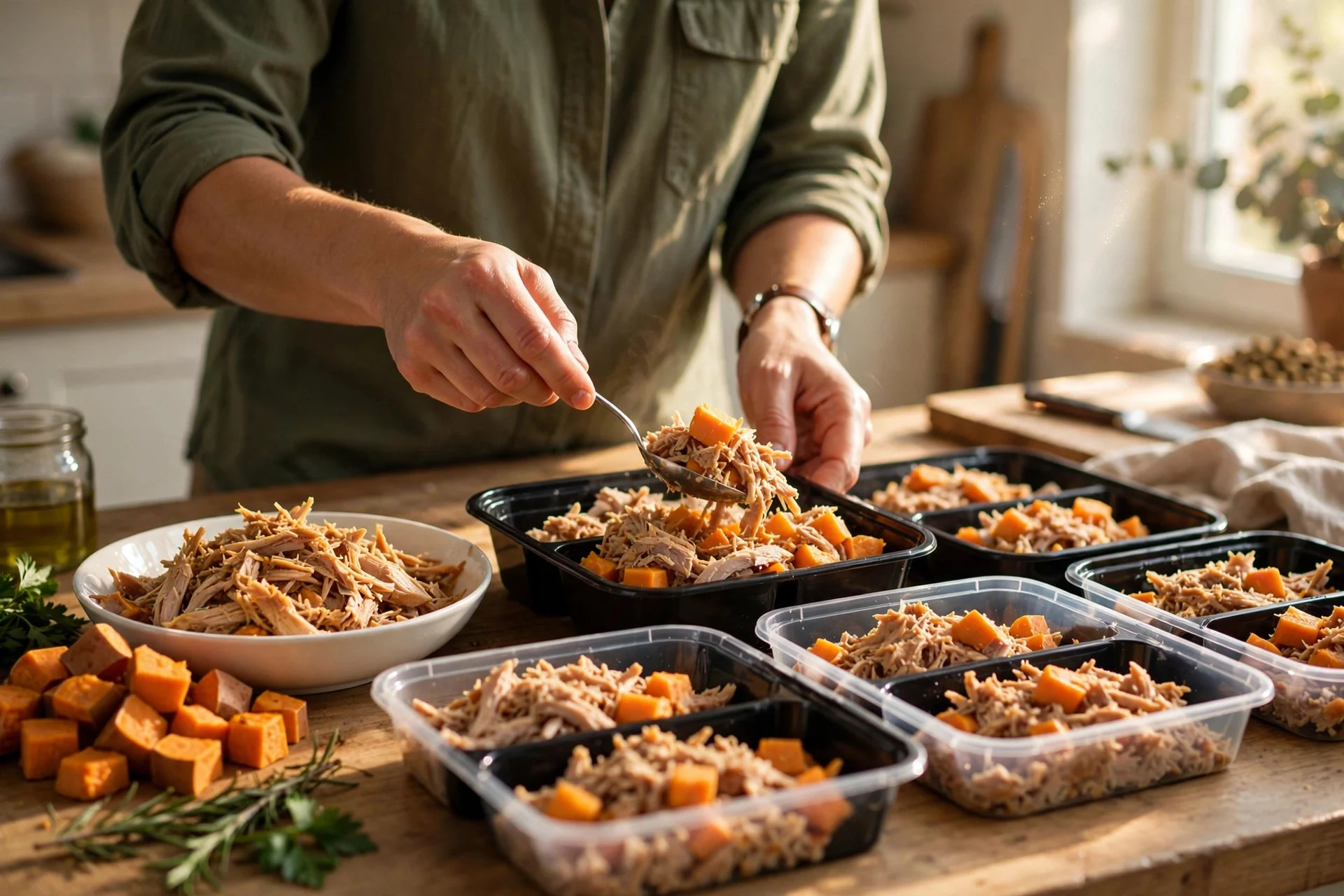
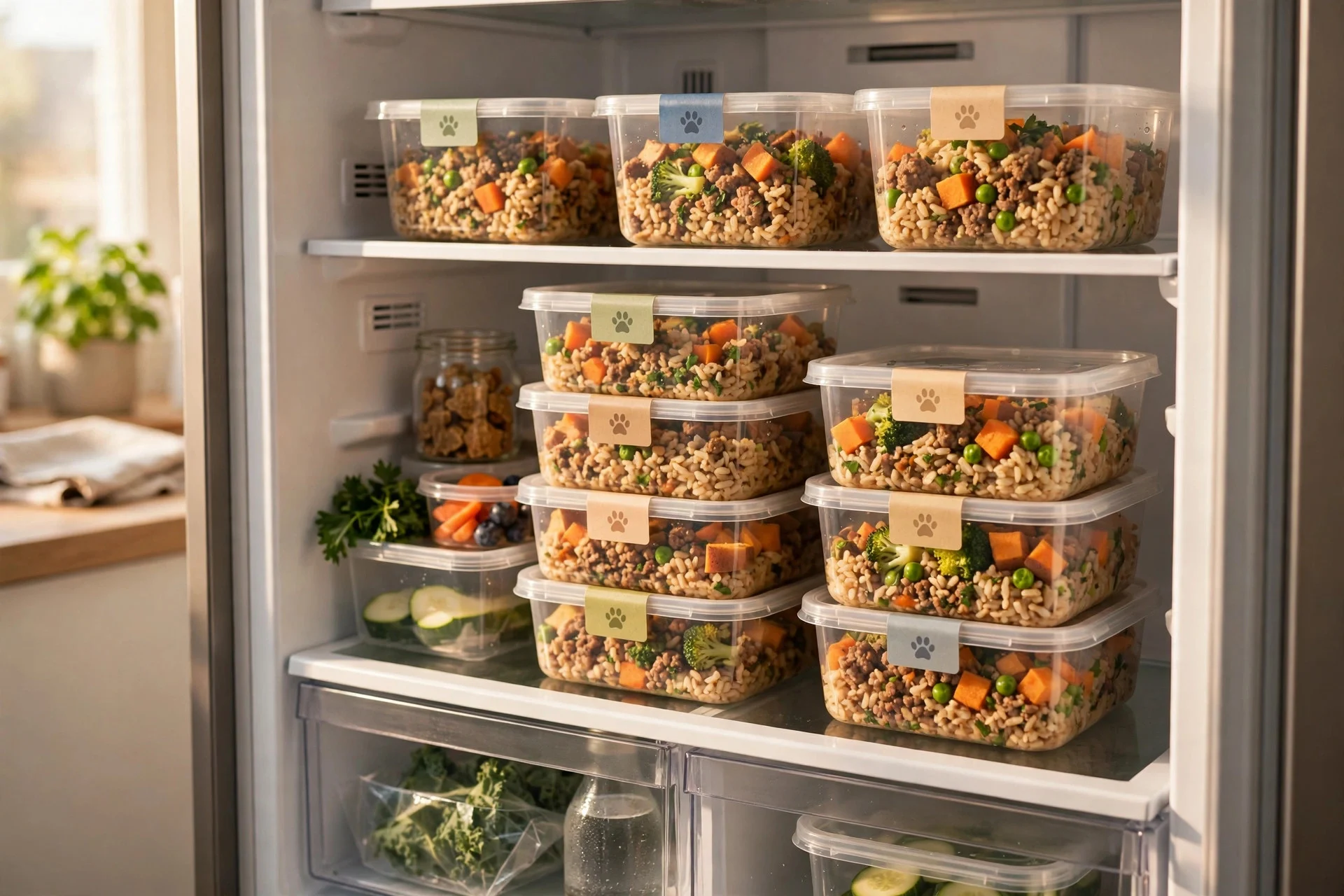
Pick one day — Sunday works for most people. Cook all proteins first (they take the longest), then grains, then vegetables while everything else rests. Assembly-line it: lay out fourteen containers, portion each day’s meals, label with the day and contents, and refrigerate. Total active cooking time is about two hours. Put on a podcast. It goes faster than you think, and the whole week of feeding takes thirty seconds per meal after that.
Storage Rules That Matter
Refrigerated portions keep three to four days max — so freeze days five through seven and move them to the fridge the night before. Use airtight containers, not the bowl with plastic wrap over it. Label everything with the date; “mystery container from last week” is not a meal plan. When in doubt about freshness, throw it out. Dog food goes bad the same way human food does.
Making It Nutritionally Complete
Here’s the part that separates responsible homemade feeding from just cooking meat and rice: dogs need specific levels of calcium, phosphorus, zinc, vitamin D, vitamin E, and essential fatty acids that plain home cooking doesn’t reliably provide. The most practical solution is a veterinary-formulated vitamin and mineral supplement designed for homemade diets — added to each meal per the product’s instructions.
Alternatively, have a veterinary nutritionist formulate your specific recipes. Yes, it costs money. It’s also the difference between “I cook for my dog” and “I feed my dog a complete diet.” If you’re committing to homemade long-term, get the formulation checked at least once.
Portioning by Dog Size
As a starting point, most adult dogs need roughly 2–3% of their body weight in food per day (homemade food has more moisture than kibble, so the volume looks bigger). A 20-pound dog eats about a pound of food daily; a 60-pound dog eats around a pound and a half to two pounds. Split into two meals. These are starting points — adjust based on your dog’s weight trend over two to three weeks, and confirm portions with your vet, especially for puppies, seniors, or dogs with health conditions.
Mistakes That Ruin a Good Prep Routine
The big ones: cooking with any seasoning, oil, or butter (keep it plain — always); prepping two weeks of food at once (it won’t stay fresh); skipping the supplement because “the food looks healthy” (looks mean nothing nutritionally); and feeding the same protein for months because it’s convenient (rotation matters). Also — and this gets people — letting prepped food sit at room temperature for hours. Treat it like human meal prep: fridge or freezer, no exceptions.
FAQs
Is homemade dog food cheaper than kibble?
Usually not, once you factor in quality meat and supplements. It can be comparable to premium kibble, but it’s rarely the budget option people expect. The payoff is ingredient control, not savings.
Can I prep raw food the same way?
You can, but the storage rules get stricter — thaw only in the fridge, use within 48 hours of thawing, and be extra rigorous about container hygiene. Raw meal prep is doable; it just demands more discipline.
How do I know if the diet is working for my dog?
Watch the fundamentals over three to four weeks: steady weight, firm stools, good energy, healthy coat, and clean teeth. Annual bloodwork at vet checkups is the real report card — it catches deficiencies long before symptoms show.
Can puppies eat from this meal prep plan?
Puppies have different calcium, phosphorus, and calorie needs than adults — don’t just feed them smaller adult portions. Get a puppy-specific formulation from your vet or a nutritionist before prepping homemade food for a growing dog.
One solid prep session a week, fourteen labeled containers, and feeding time becomes the easiest part of your day. Start this Sunday — your future self, the one not cooking chicken at dawn, will thank you.

























