
Bone broth has a bit of a wellness halo around it — for humans and dogs alike. Some of the claims out there are… let’s say enthusiastic. But strip away the hype and bone broth for dogs is still genuinely useful stuff: hydrating, appetizing, easy on the stomach, and simple to make. It just won’t cure arthritis or add five years to your dog’s life, and anyone telling you otherwise is selling something.
Here’s the honest version: what bone broth actually does, what it doesn’t do, and a dead-simple recipe that costs almost nothing to make.
Simple Bone Broth Recipe
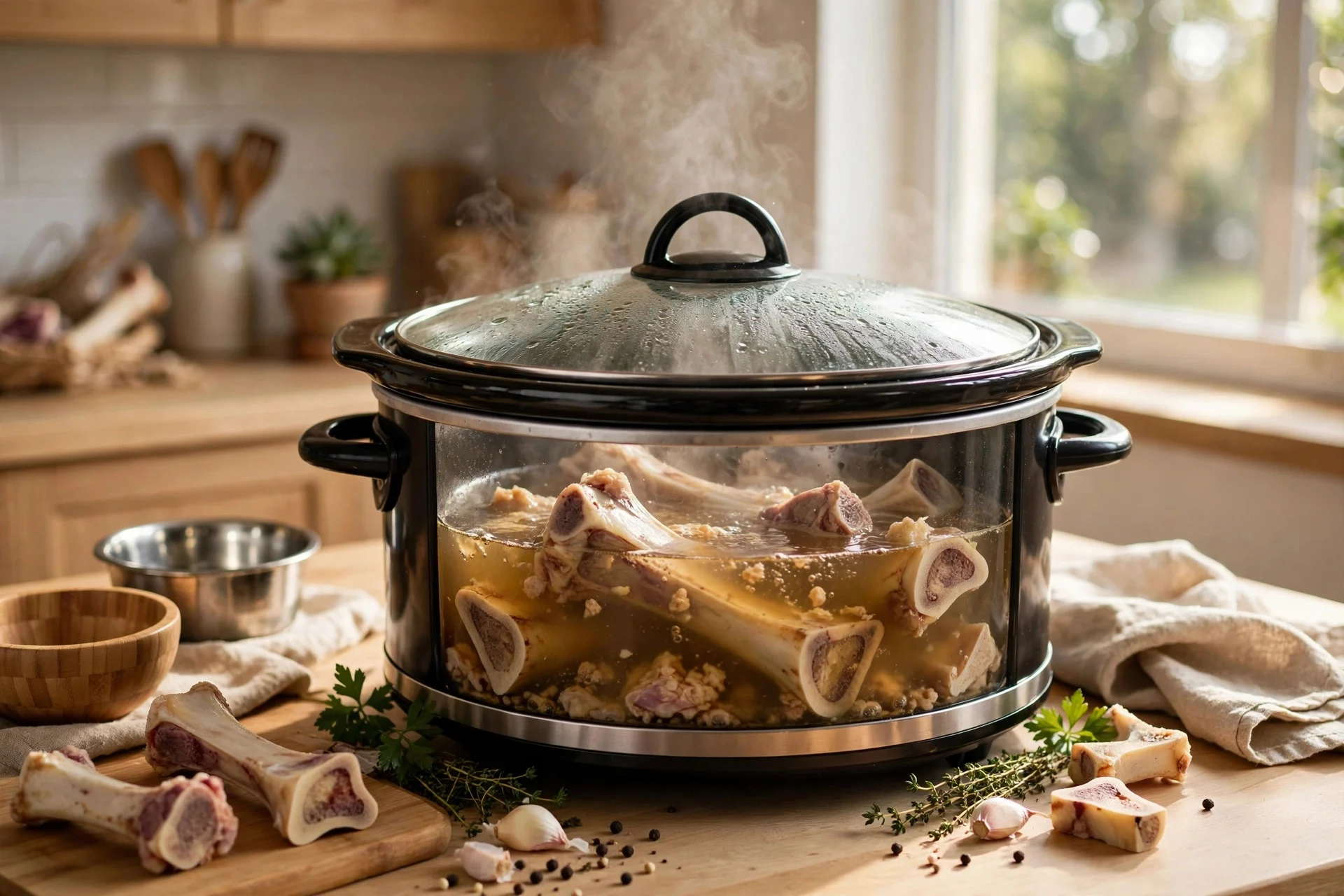
Put two to three pounds of raw bones in a slow cooker or large pot — marrow bones, knuckles, necks, or feet all work. Chicken feet are excellent if you can find them (lots of gelatin). Cover with water plus an inch, add two tablespoons of apple cider vinegar (it helps draw minerals from the bones — you won’t taste it in the final product), and that’s it. No onion. No garlic. No salt.
Cook on low for 18 to 24 hours. Yes, really that long — the extended time is what breaks down the connective tissue into gelatin. Strain out all bones and bits, let it cool, then refrigerate overnight. The fat will solidify on top; skim it off. What you’re left with should jiggle like gelatin when cold — that’s the sign you did it right. It keeps five days in the fridge or three months in the freezer (freeze in ice cube trays for easy portions).
One critical safety note: never feed your dog the cooked bones left over from broth-making. They’re brittle and dangerous. They go in the trash, not the bowl.
7 Real Benefits (No Hype)
1. Gets Picky or Sick Dogs Eating
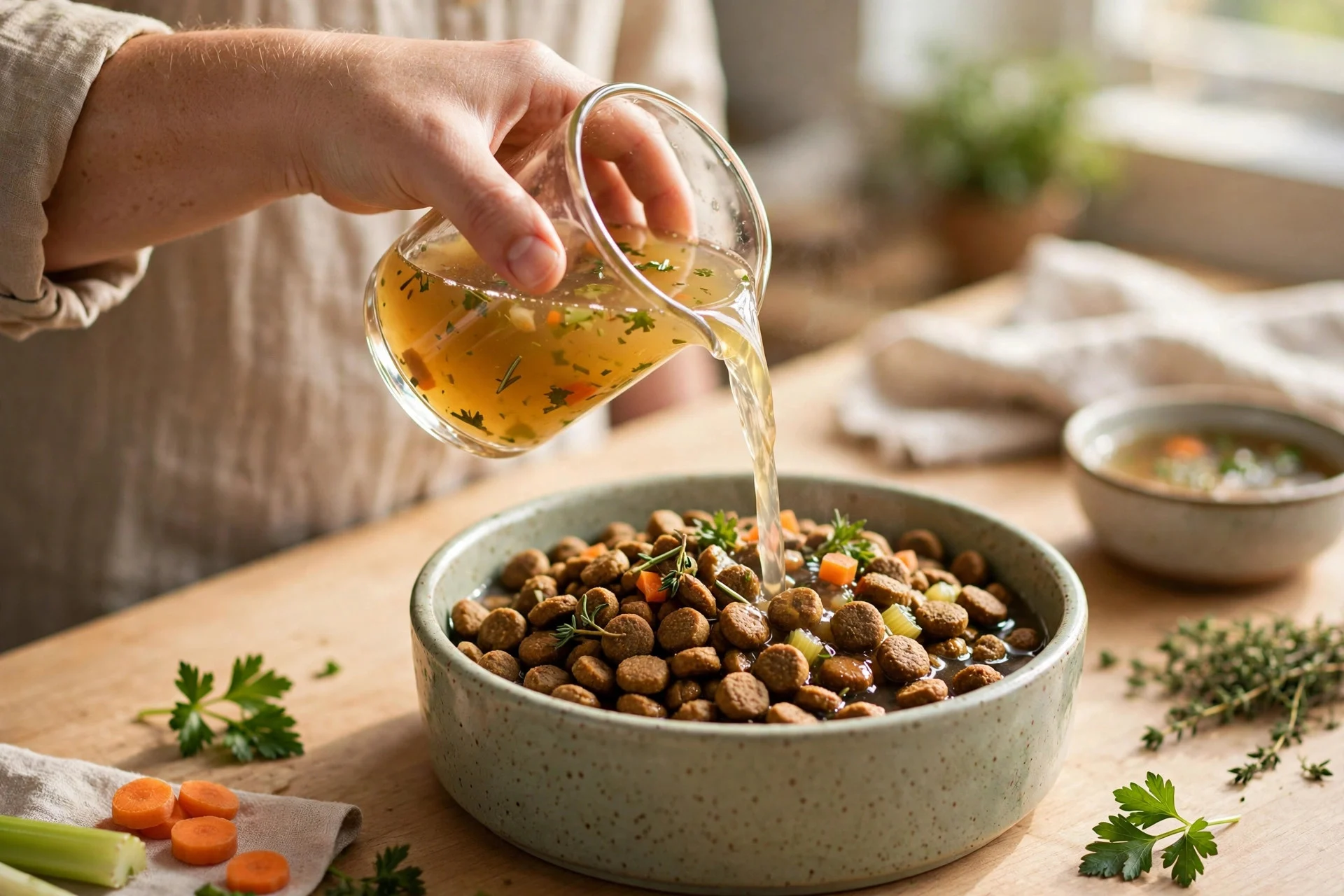
A warm splash of broth over food is one of the most reliable appetite tricks there is. The smell wakes up interest in dogs who’ve gone off their meals from illness, stress, or just being dramatic. This alone makes broth worth keeping in your freezer — appetite loss is scary, and anything that safely encourages eating has real value.
2. Adds Hydration
Many dogs don’t drink enough water, especially in winter or when they’re unwell. Broth is mostly water that dogs actually want to consume. For a dog recovering from vomiting or diarrhea (once they’re keeping things down), diluted broth is a gentle way to get fluids back in. It’s not a replacement for veterinary fluid therapy when that’s needed — but for mild cases, it helps.
3. Gentle on Sensitive Stomachs
Plain bone broth is about as inoffensive as food gets: no fiber to process, no fat if you skim it properly, just warm liquid nutrition. It’s a good first step when reintroducing food after a stomach upset, before moving to solid bland food. Think of it as the waiting room between fasting and eating.
4. Contains Gelatin and Collagen
The jiggle is real — long-simmered broth contains gelatin from broken-down collagen. Gelatin may support gut lining health, and it’s a reasonable, digestible protein source. What it won’t do: rebuild your dog’s joints. The collagen in broth gets broken down during digestion like any other protein. Joint claims are where the marketing outruns the science, so enjoy the gut-friendly properties without expecting orthopedic miracles.
5. Provides Some Minerals
The vinegar-in-the-pot trick does pull small amounts of calcium, magnesium, and phosphorus from the bones into the broth. “Small amounts” is the honest qualifier — broth is not a mineral supplement and shouldn’t be treated as one. It’s a nice bonus on top of a balanced diet, not a replacement for proper nutrition.
6. Useful for Hiding Medication
Trying to get pills into a dog who has learned every trick in the book? Soaking the pill in a bit of broth, or mixing liquid medication into a small bowl of it, works better than most commercial pill pockets — and costs essentially nothing. The strong smell masks the medicinal taste that makes dogs spit pills across the room.
7. Enrichment When Frozen
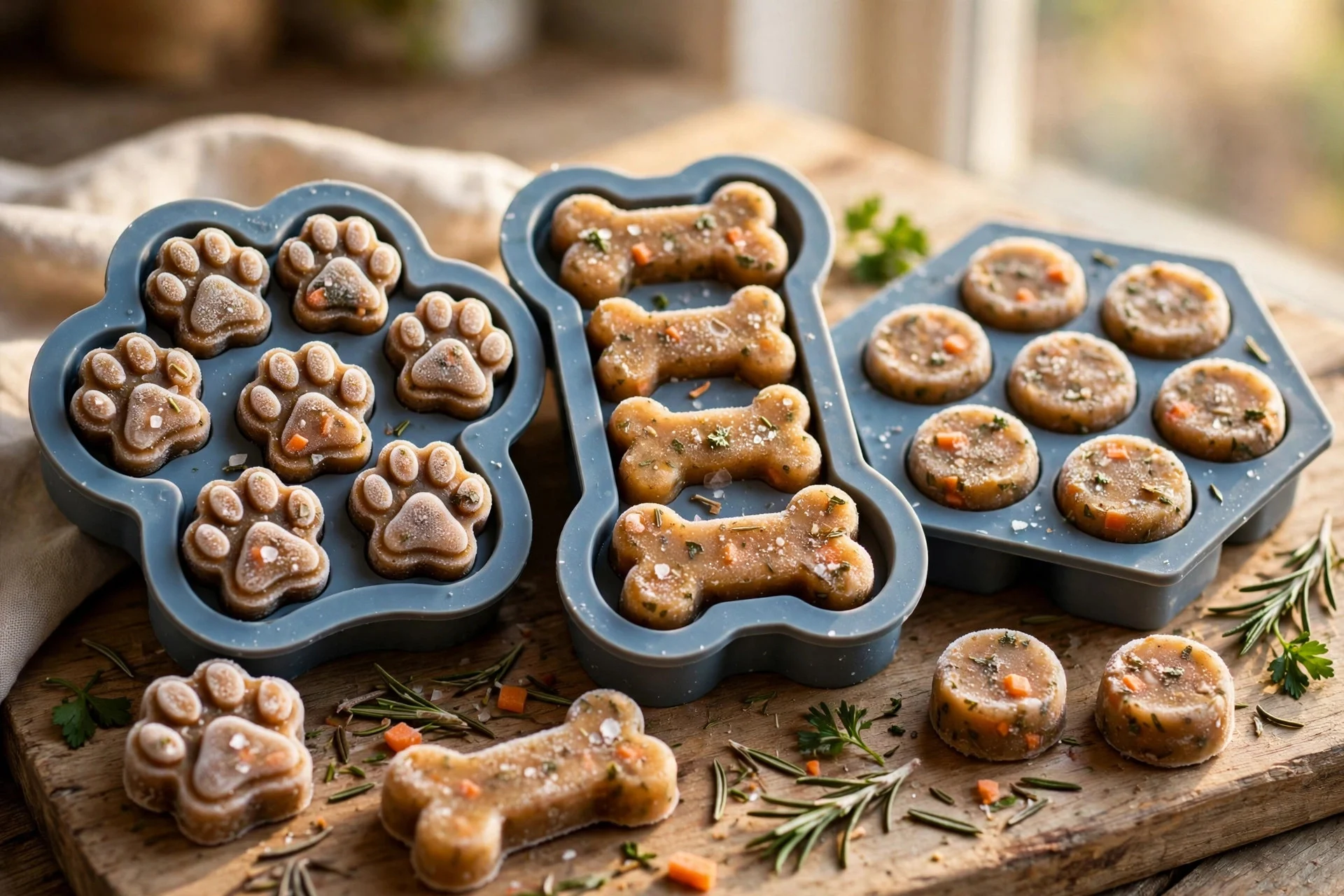
Freeze broth in silicone molds or mix it with a little plain pumpkin and freeze in a Kong. Frozen broth treats are cheap enrichment that keeps a dog occupied on a rainy afternoon. Just keep portions reasonable — it’s still calories, and a whole tray of broth cubes adds up for a small dog.
What Bone Broth Won’t Do
Let’s clear the air: bone broth will not cure arthritis, fix hip dysplasia, detox anything (dogs have livers and kidneys for that), boost the immune system in any measurable way, or replace actual veterinary treatment for any condition. It’s a nutritious, hydrating, appetizing liquid. That’s genuinely useful — it just isn’t medicine. Anyone claiming disease-curing properties is selling broth, not science.
Store-Bought vs. Homemade
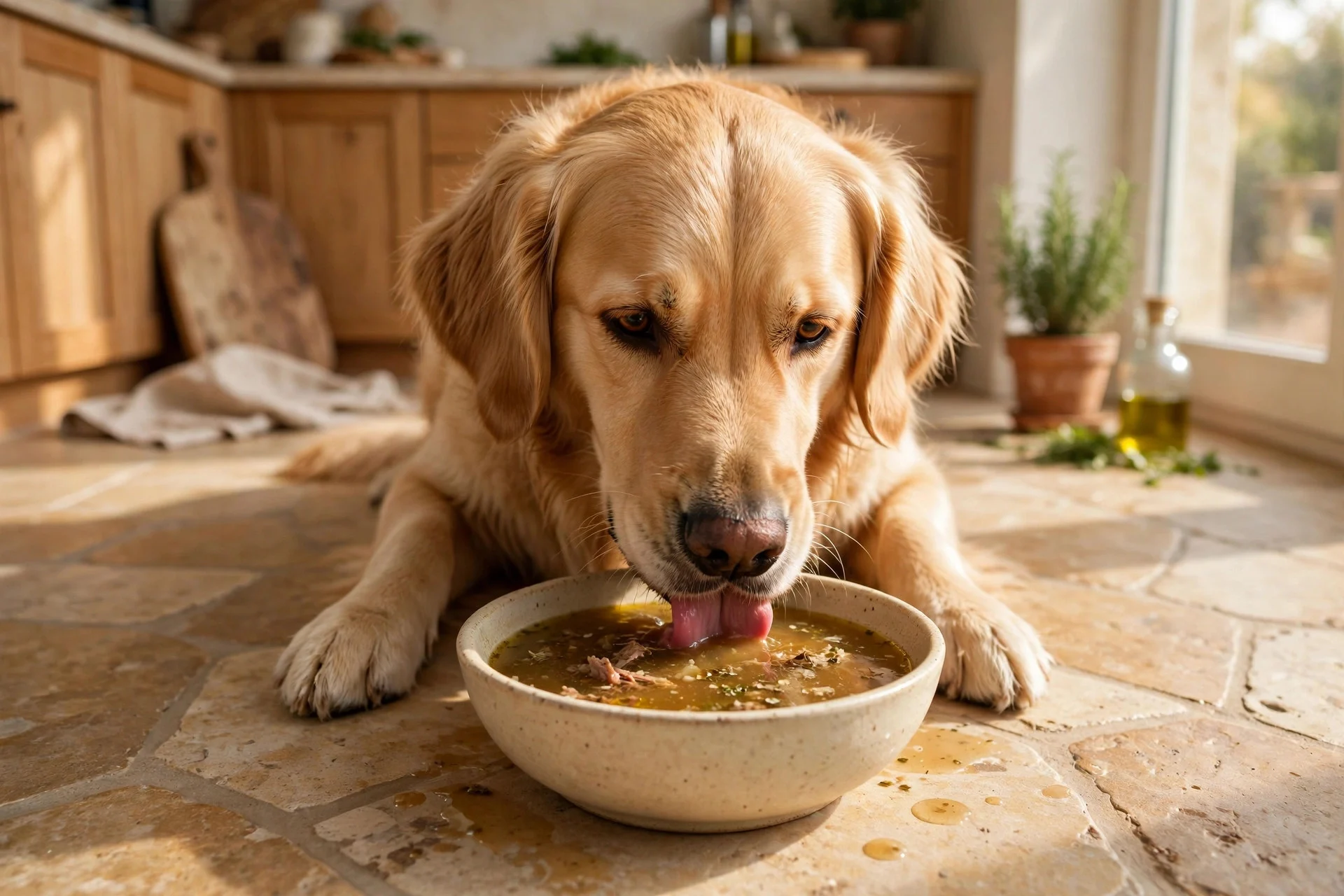
Homemade wins on two counts: you control the ingredients completely, and it’s far cheaper. Store-bought bone broth marketed for pets can be fine, but read the label like a detective — many contain onion or garlic, sometimes listed innocuously as “natural flavors.” Onion and garlic are toxic to dogs, and “pet” branding doesn’t guarantee their absence. If you buy it, the ingredient list should be: bones, water, maybe vinegar. Nothing else.
Mistakes to Avoid
Adding onion or garlic for flavor (toxic — never); not skimming the fat (a fatty broth can trigger pancreatitis in sensitive dogs); feeding the leftover cooked bones (splinter risk); and treating broth as a meal replacement (it’s a supplement to food, not food). Also: serving it scalding hot. Lukewarm is the target — test it the way you’d test a baby bottle.
FAQs
How much bone broth can I give my dog?
A few tablespoons for small dogs, up to half a cup for large dogs, once or twice a day — as a topper or treat, not a meal. It has calories, so account for it in the day’s total food.
Can puppies have bone broth?
Yes — plain, homemade, skimmed broth is fine for puppies. It’s actually useful for softening kibble during weaning. Just keep it plain and age-appropriate in portion.
How long does homemade bone broth last?
Five days refrigerated, three months frozen. If it smells off or looks slimy, throw it out — the same rules as any homemade food apply.
Can I use broth from my own cooking?
Only if it was made without onion, garlic, excess salt, or heavy seasoning. Most human cooking broth fails this test. When in doubt, make a separate plain batch for the dog — it’s cheap enough.
Bone broth is one of those rare things that’s both simple and genuinely useful — as long as you keep your expectations honest. Make a batch this weekend, freeze it in portions, and you’ll have an appetite trick, a hydration boost, and a cheap enrichment treat ready whenever you need one.

























