
When your dog’s stomach goes sideways, dinner becomes a high-stakes decision. The wrong ingredient means a rough night for everyone involved — and I don’t just mean the dog. Finding a reliable homemade dog food sensitive stomach recipe can genuinely change your day-to-day life once you know which ingredients calm things down instead of stirring them up.
I’ve been through this with my own dog, and let me tell you — the trial and error phase is miserable. What finally worked was going back to basics: bland, simple, single-protein meals, introduced one at a time. Below are eight recipes that follow that principle. They’re not magic. They’re just gentle, digestible, and built from ingredients that most sensitive stomachs tolerate well.
8 Gentle Homemade Recipes
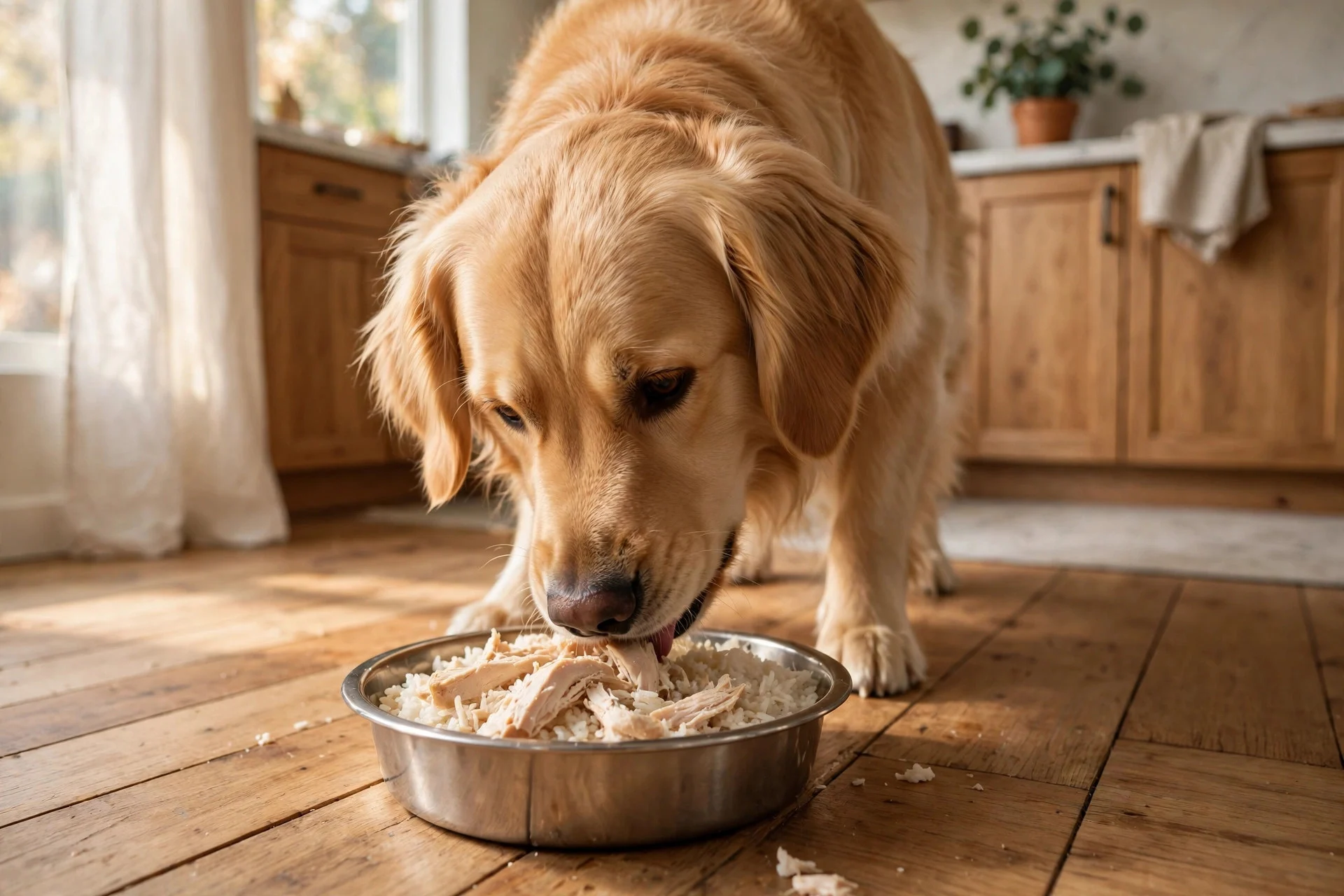
1. Plain Chicken & Rice (The Classic Reset)
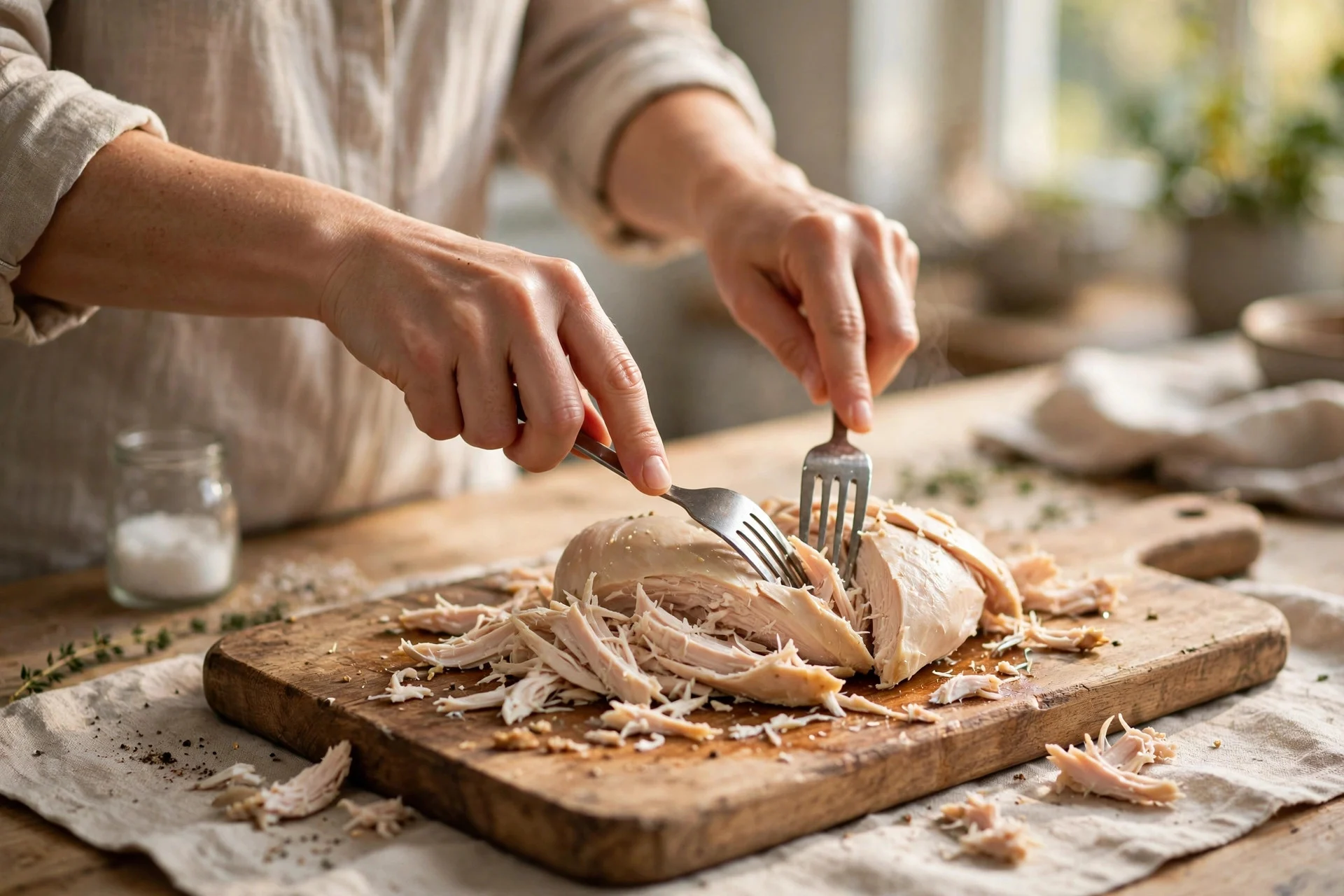
Boil one boneless, skinless chicken breast in plain water until cooked through (165°F internally). Shred it and mix with one cup of cooked white rice — not brown rice, which has more fiber than a struggling stomach wants right now. Serve lukewarm in small portions. This is the baseline vets recommend for a reason: bland, low-fat, easy to digest. Once stools firm up for a couple of days, you can start mixing this back into the regular diet gradually.
2. Turkey & Pumpkin Mash
Brown one pound of lean ground turkey (drain off every drop of fat) and mix it with half a cup of plain canned pumpkin — the pure pumpkin, not pie filling. Pumpkin’s soluble fiber is genuinely helpful for both diarrhea and constipation because it regulates water in the gut. Portion it out and refrigerate what you don’t serve; it keeps about three days.
3. Cod & Sweet Potato
Bake two cod fillets at 375°F for about 15 minutes (no oil, no seasoning) and flake the meat, checking carefully for bones. Mix with one cup of mashed, plain cooked sweet potato. Fish is one of the least likely proteins to trigger a reaction, which makes this a great option for dogs who react to poultry. Sweet potato adds gentle fiber and some natural sweetness that most dogs love.
4. Beef & Oatmeal Bowl
Use the leanest ground beef you can find (90/10 or leaner), brown it thoroughly, and drain the fat completely. Mix with one cup of cooked plain oatmeal. Oatmeal is easier on sensitive stomachs than you’d guess — it’s a soluble-fiber grain that digests slowly and steadily. Skip the beef entirely if your dog has a known beef sensitivity; this recipe exists because some dogs handle beef better than chicken. Watch and learn what your dog tolerates.
5. Egg & Rice Scramble
Scramble three eggs in a dry nonstick pan — no butter, no oil, no salt. Fold in one cup of cooked white rice. Eggs are one of the most digestible protein sources there is, and this recipe is about as simple as cooking gets. It’s a good bridge meal when your dog is recovering but starting to need a little more than plain chicken and rice. Cool it to room temperature before serving.
6. Turkey & Zucchini Stew
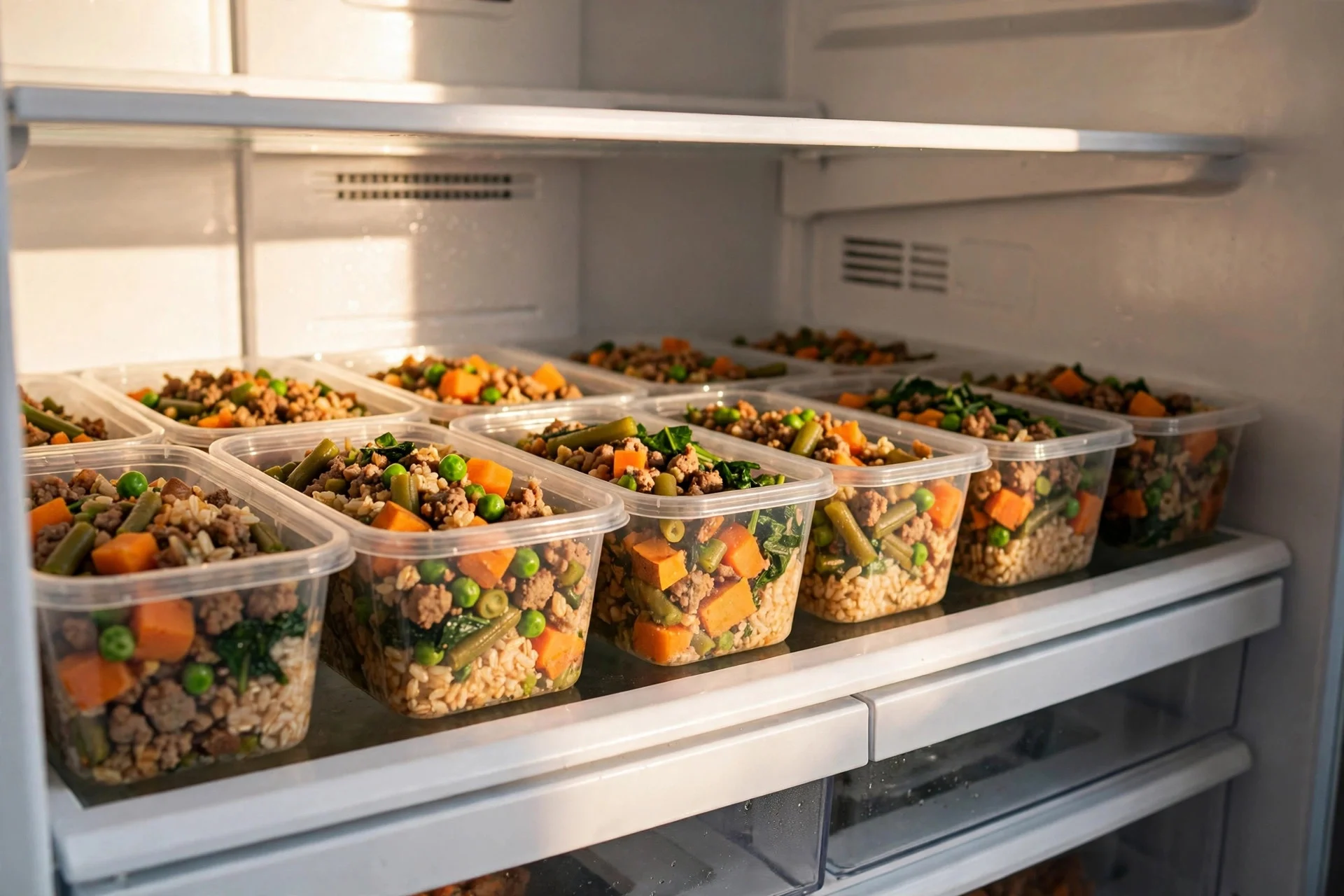
Simmer one pound of ground turkey with two diced zucchini in just enough water to cover, for about 20 minutes until everything is soft. Zucchini is low-residue and gentle — it practically melts into the mixture. This is a good one for dogs who need something a little more “meal-like” after days of bland reset food. Drain off any excess liquid and serve warm. Leftovers freeze well in portion-sized containers for up to a month.
7. Chicken & Bone Broth Porridge
Shred one poached chicken breast and stir it into one cup of cooked rice with half a cup of low-sodium bone broth (homemade, or store-bought with no onion or garlic in the ingredients — check the label, seriously). The broth adds flavor and moisture, which helps if your dog has been off their food and needs encouragement. This one works great for the “I’m feeling better but still dramatic” recovery phase.
8. Whitefish & Potato Purée
Boil one tilapia or sole fillet and two peeled potatoes until both are soft, then mash them together into a rough purée. Potatoes are starchy and binding, which can help firm things up, and whitefish is about as inoffensive to a dog’s gut as protein gets. This is the recipe I reach for when nothing else is sitting well. It’s boring. Boring is exactly what a sensitive stomach wants.
Ingredients That Usually Sit Well
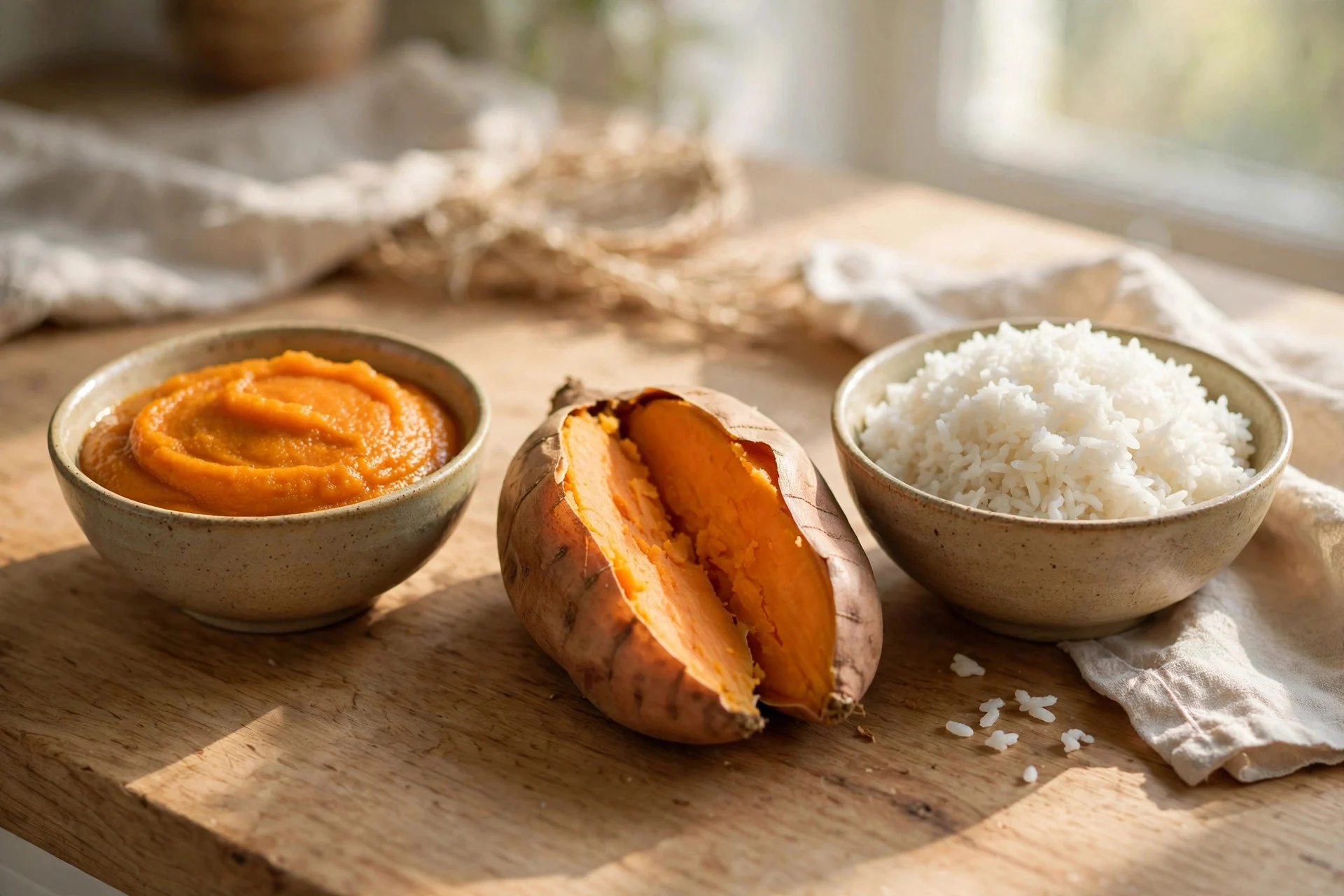
Stick with the short list: plain cooked chicken or turkey breast, white rice, plain pumpkin purée, sweet potato, whitefish, plain cooked eggs, oatmeal, zucchini, and plain peeled potatoes. Cook everything without oil, butter, salt, seasoning, onion, or garlic. The whole point is removing variables — if something triggers your dog, you want to know exactly what it was.
Introduce one new ingredient at a time and give it two to three days before adding another. It’s slow, but it’s the only way to figure out what your dog’s stomach objects to instead of guessing forever.
Mistakes That Make Things Worse
The biggest one is switching foods too fast. A sensitive stomach needs transitions over seven to ten days, not two. Second: too much fat. Trim it, drain it, skip the skin — fat is the number one trigger for digestive upset in dogs. Third: “a little bit won’t hurt” thinking with table scraps. Rich, seasoned human food is exactly what got most of us into this situation in the first place.
And don’t keep a dog on a bland homemade diet indefinitely without a plan. These recipes are gentle recovery food, not complete nutrition. If you’re going to feed homemade long-term, you need a vet or veterinary nutritionist to balance it — dogs need specific calcium, vitamin, and mineral levels that plain chicken and rice simply don’t provide.
When to Call the Vet Instead
Homemade food helps with mild, occasional upset. It does not replace a vet visit when something is actually wrong. Call your vet if vomiting or diarrhea lasts more than 48 hours, if there’s blood in the stool or vomit, if your dog won’t drink water, if the belly looks bloated or painful, or if a puppy under six months has any digestive symptoms at all. Chronic digestive issues — the kind that keep coming back — deserve a proper workup, not just another recipe swap.
FAQs
How long can I feed my dog homemade food for a sensitive stomach?
A few days to a couple of weeks for recovery is fine. Beyond that, talk to your vet about balancing the diet or transitioning to a commercial sensitive-stomach formula. Long-term homemade feeding needs proper supplementation.
Is white rice or brown rice better for sensitive stomachs?
White rice, every time. Brown rice has more fiber and is harder to digest — the opposite of what you want when the stomach is already struggling. Save the brown rice for when things are back to normal.
Can I use these recipes for a dog with diagnosed food allergies?
Only under your vet’s guidance. True food allergies usually require an elimination diet with a novel protein your dog has never eaten — and the “safe” ingredients above might include the very thing your dog is allergic to. Don’t guess with allergies.
Should I add supplements to homemade dog food?
For short-term recovery feeding, no — keep it simple. For anything longer than two weeks, yes, but get the supplement plan from your vet or a veterinary nutritionist, not from a blog comment section.
Start with the chicken and rice reset, add one ingredient at a time, and pay attention to what your dog’s stomach tells you. Most sensitive stomachs just need simpler food and slower changes.

























