
Recall — a dog who comes when called, every time — is the closest thing to a superpower in dog ownership. It’s also the skill that can save your dog’s life. A reliable recall means off-leash hikes, safe dog park visits, and never having that stomach-drop moment when your dog bolts toward a road. If you want to teach dog recall that actually holds up in the real world, this is the plan.
Here’s the golden rule of recall training: coming to you must always, always be the best thing that ever happens to your dog. Better than the squirrel. Better than the other dog. If you ever call your dog just to do something unpleasant — nail trim, bath, end of fun — you’ve taxed the account. We’ll build a recall so rewarding that your dog sprints back like they won the lottery.
7 Steps to a Reliable Recall
1. Pick a Special Recall Word
Don’t use your dog’s name — you’ve probably already poisoned it by saying it a thousand times with no follow-through. Pick a fresh, exciting word or whistle pattern: “here!”, “presto!”, a specific whistle trill. Something you don’t say in normal conversation. This word will mean one thing only: sprint to me, amazing things happen. Keep it sacred. For the next month, this word only comes out during training, never to summon the dog for a bath.
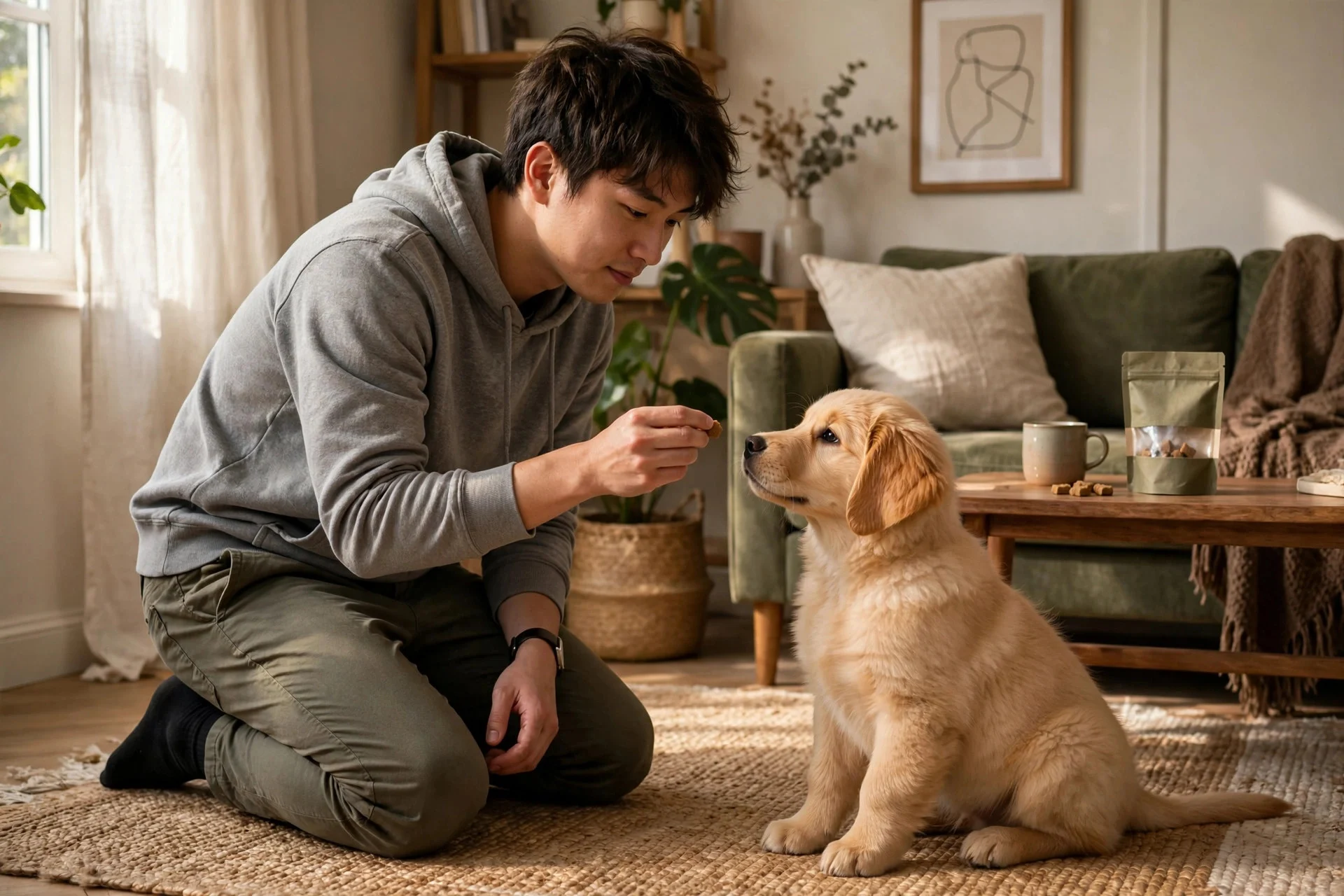
2. Charge the Word Indoors (Make It Magic)
In your living room, say the recall word in a happy voice, and when your dog looks at you or takes a step toward you, throw a party: five tiny treats in a row, tossed one at a time, plus genuine excitement from you. Repeat 10 to 15 times per session, two sessions a day, for three days. You’re not asking for a behavior yet — you’re building an emotional response. The word itself should make your dog’s eyes light up.
3. Add Tiny Distances Indoors
Now have a helper hold your dog (or wait until they’re mildly distracted sniffing something), walk 6 feet away, say the word once, and reward the sprint back with a jackpot — a handful of treats, one after another. Gradually increase to across the room, then from another room. Only call when you’re 90% sure they’ll come. Every successful rep builds the habit; every ignored call teaches them that the word is optional. Set them up to win.
4. Practice in the Yard on a Long Line
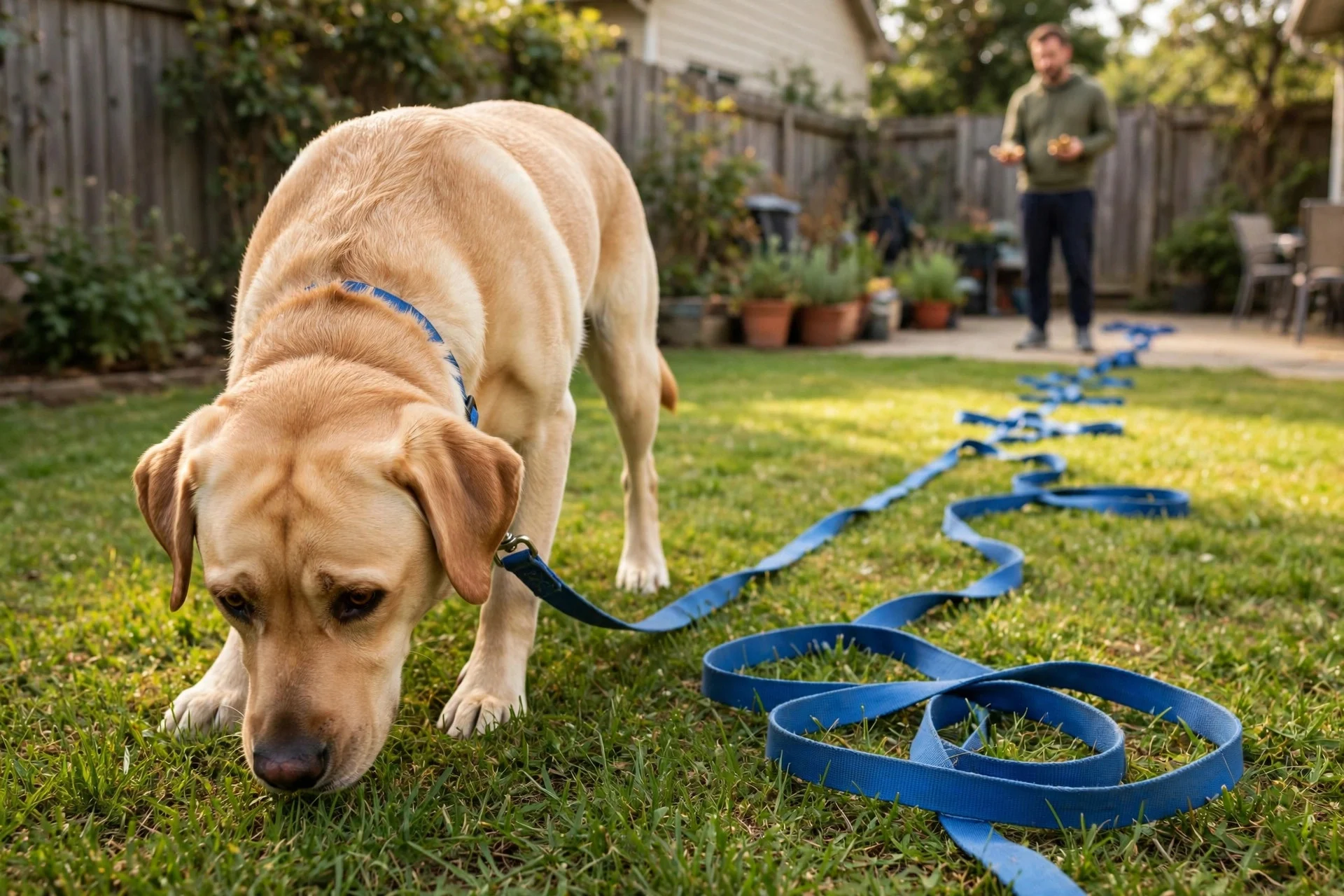
Move outside with a 20 to 30 foot long line (not a retractable leash — a flat long line). Let your dog wander and sniff, then call. If they come, it’s a jackpot. If they don’t, don’t repeat the word — calmly reel in the long line, guide them to you, reward, and try again with less distance or distraction. The long line isn’t for corrections. It’s insurance that lets you practice safely while the recall is still under construction.
5. Become More Exciting Than the Environment
This is where most recalls die. In the yard, practice calling away from mild distractions: a tossed toy, a family member walking by. When your dog chooses you over the distraction, the reward has to be enormous — a full 10 seconds of treat delivery, a favorite game of tug, whatever your dog values most. You’re competing with the most interesting things in the world. Pay like you mean it. Average rewards build average recalls.
6. Add Real-World Distractions Gradually
Take the show on the road: quiet park, then busier park, then areas with other dogs at a distance. Each new environment is a new training context — expect the recall to get worse before it gets better, and that’s completely normal. Keep the long line on for safety. Work at distances and distraction levels where your dog succeeds 8 out of 10 times. If success drops below that, you’ve jumped ahead too far. Back up. There’s no shame in retreating a step; there’s real danger in pushing forward.
7. Proof It and Maintain It Forever
A recall is never “finished.” Even a great recall needs maintenance: surprise jackpot recalls a few times a week for the rest of your dog’s life. Randomly call your dog during play, reward hugely, then let them go back to playing. This teaches the most important lesson of all — coming to you doesn’t end the fun. It pauses it, pays well, and then the fun resumes. Dogs who learn this never hesitate, because there’s no downside to coming.
How Long Does a Reliable Recall Take?
For a puppy or a food-motivated adult, you’ll have a solid indoor and yard recall in three to four weeks. A recall that holds up around other dogs and wildlife typically takes three to six months. And some high prey drive breeds may never be 100% trustworthy off-leash around squirrels. That’s not failure — that’s knowing your dog.
Practice in short sessions: 5 to 10 minutes, once or twice a day, plus random jackpot recalls during normal life. If your dog shuts down — stops responding, moves away — the difficulty jumped too fast. Drop back to an easier environment and rebuild.
Mistakes That Ruin Recalls
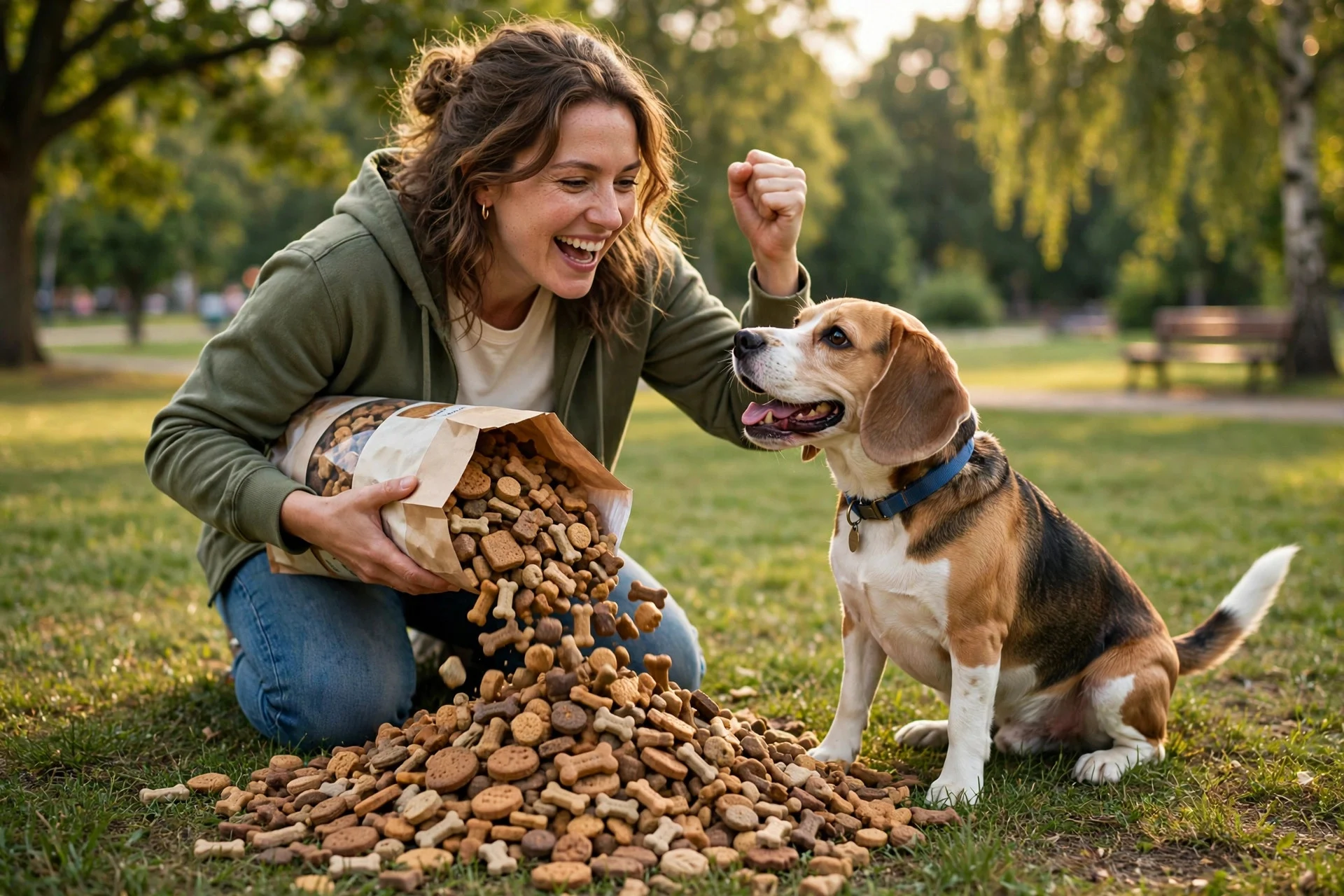
The number one recall killer: calling your dog to punish them or end something fun. Called for a nail trim? You just taught them that coming to you leads to misery. Called at the dog park and immediately leashed up and left? Coming to you ends the party. Always reward the recall, then wait a beat before doing the unpleasant thing — or better yet, go get the dog instead of calling them for it.
Repeating the cue is the second killer. “Come… come… COME!” teaches the dog that the first calls are meaningless warm-ups. Say it once. If they don’t respond, go get them or make yourself more interesting — run backward, make silly noises. Never punish a slow recall, either. Even if it took three minutes, reward the arrival. You want them to think coming back was a great decision.
FAQs
What if my dog only comes when I have treats visible?
You’re showing your hand too early. Keep treats hidden in a pouch, and start rewarding randomly — sometimes a jackpot, sometimes just praise and a quick game. The uncertainty actually strengthens the behavior. But keep paying, at least occasionally, forever. Would you keep doing your job if the paychecks stopped?
Can I train recall with an older dog who’s never learned it?
Yes. Older dogs often learn faster because they’re less impulsive. The steps are identical. The only difference is you may need higher-value rewards to compete with a lifetime of self-rewarding habits like chasing. Real meat, not dry biscuits.
My dog comes perfectly at home but ignores me at the park. Why?
Because “come” at home and “come” at the park are two different skills in the dog’s mind. You haven’t trained the park version yet — you’ve only trained the living room version. Go back to step 6 and work the park at long-line distance with massive rewards. It’ll come.
Is it ever safe to go fully off-leash?
When your dog recalls away from their highest-level distraction 9 out of 10 times on a long line, across multiple locations, you’re getting close. Start with a trailing long line (dragging, not held) in a safe enclosed area. And know your dog honestly — some dogs earn off-leash freedom everywhere, some earn it only in certain places. Both are fine.
A reliable recall is built one jackpot at a time, over weeks and months, by someone who never makes coming back a bad deal. Start today, in your living room, with five treats and a happy voice.

























