
“Shake” is the trick that makes everyone smile — your dog offers a paw, the guest melts, and you look like a training genius. It takes about ten minutes to teach the basics. But if you want to teach dog shake properly — a clean paw offer on cue, not a frantic scratching at your hand — there’s a right way to build it.
The beauty of “shake” is that most dogs already paw at things naturally. You’re not installing new software; you’re putting a name on behavior your dog already does and shaping it into something polished. Five steps, a handful of treats, and you’ll have the crowd-pleaser in your repertoire by the weekend.
5 Steps to Teach “Shake”
1. Start With Your Dog in a Sit
Ask for a sit first — a sitting dog is a thinking dog, and the paw lift comes naturally from this position. Have 15 to 20 pea-sized treats ready and your dog’s attention. If your dog won’t hold a sit yet, work on that for a few days first; trying to teach shake to a dog who can’t sit still is like teaching dance moves to someone mid-sprint. Get the foundation, then build.
2. Lure the Paw Up (Don’t Grab It)
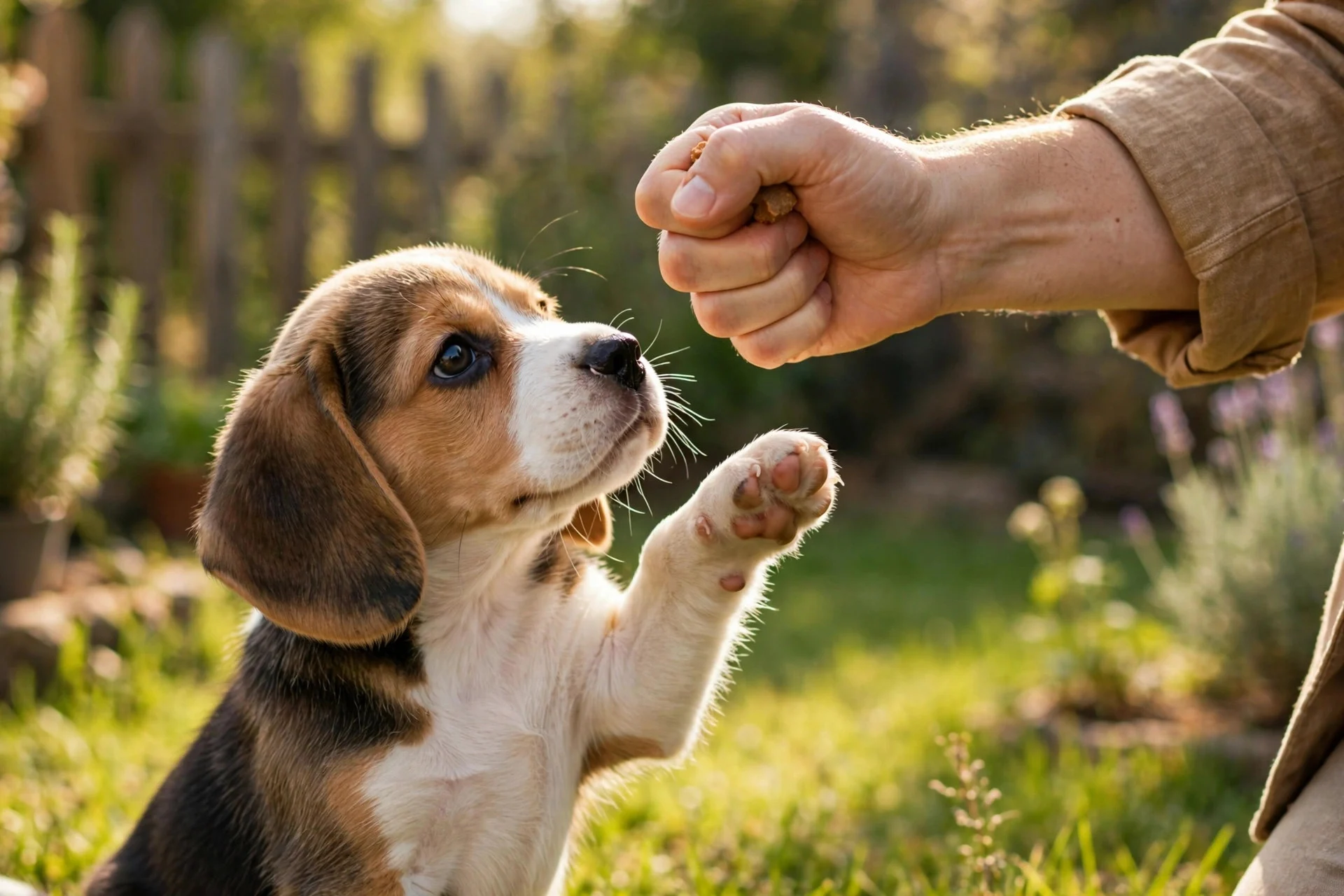
Hold a treat in your closed fist just out of reach, slightly to one side of your dog’s nose. Most dogs will nose at your hand, then paw at it in frustration — the moment that paw lifts off the ground, mark it with “yes!” and open your hand to deliver the treat. You’re capturing the paw lift, not wrestling the paw up yourself. Grabbing the paw and shaking it teaches the dog nothing except that hands are weird. Let them offer it. The first few reps might take a minute of nose-bopping before the paw comes up. That’s fine — the thinking is the learning.
3. Add the Cue Word Once It’s Reliable
After 10 to 15 successful paw lifts across a couple of sessions, start saying “shake” just before you present your fist. The sequence becomes: cue, dog lifts paw, you mark and reward. Within a few days, most dogs connect the word to the action. Then start fading the lure — present your open palm instead of a closed treat fist, and reward from your other hand. If the dog gets confused when the lure disappears, you faded too fast. Go back one step. There’s no deadline here.
4. Build Duration and Polish
Now shape the details. Reward longer paw holds — count “one Mississippi” before marking, then two. Gently take the paw in your hand for a brief moment before treating, so the dog gets comfortable with the actual handshake. If your dog starts offering the paw frantically for everything (common!), only reward it when you’ve given the cue. Uncued pawing gets ignored — no treat, no attention, hand withdrawn. Dogs learn fast which paw offers pay and which don’t.
5. Add Flair (Optional but Fun)
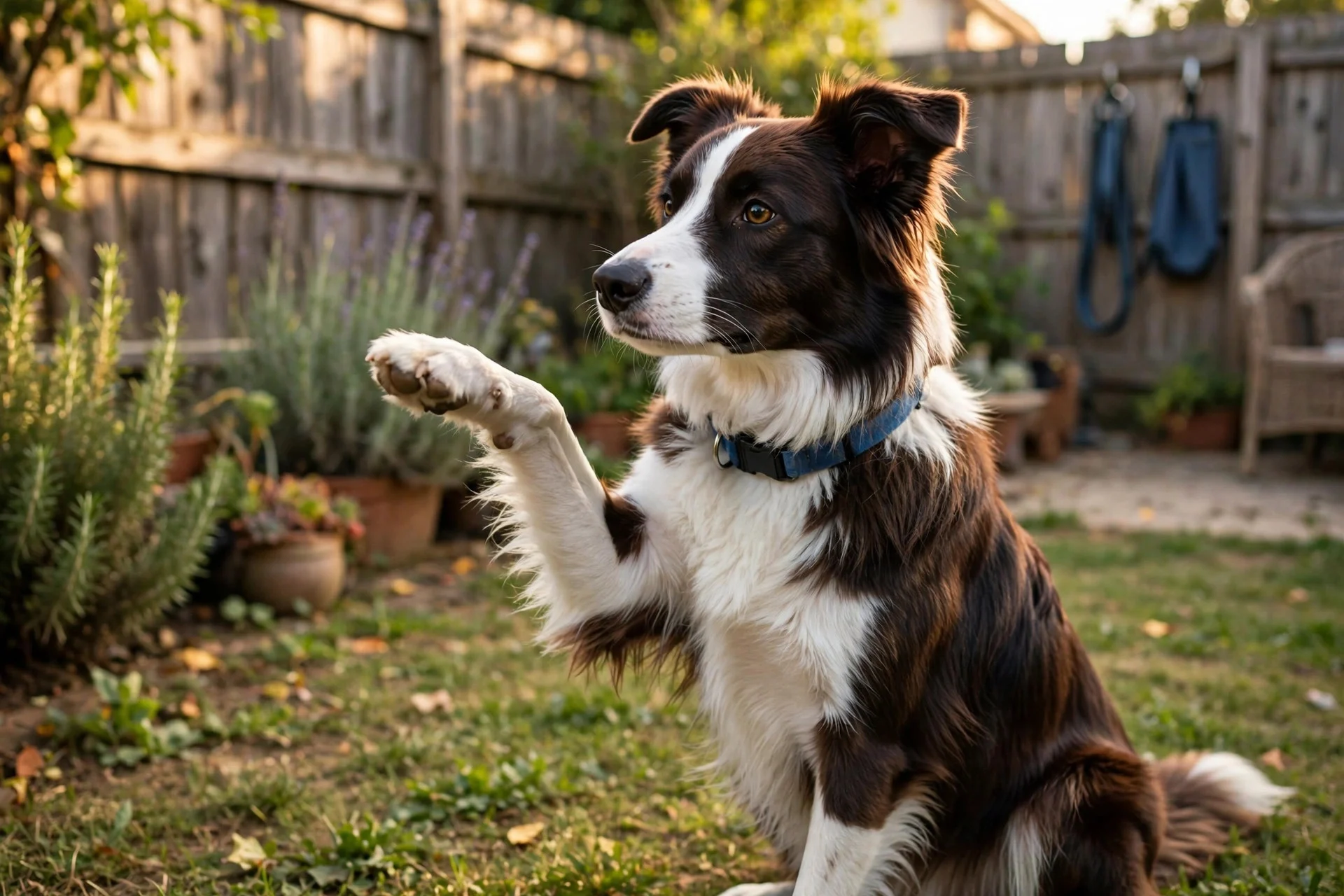
Once “shake” is solid, the variations are easy: “other paw” (present your other hand — most dogs figure this out in one session), “high five” (palm up, higher position), “wave” (reward the paw lift before contact, gradually increasing distance). Each new variation takes a fraction of the time because your dog now understands the game: offer paw behaviors, get paid. You’ve built a trick-learning machine.
How Long Does It Take?
The basic paw-on-cue usually clicks within 2 to 3 sessions of 5 minutes each — it’s genuinely one of the fastest tricks to teach. A polished shake with duration, comfort with paw handling, and no frantic uncued offering takes about two weeks of casual practice. Practice in short bursts: 5 minutes, once or twice a day, always ending with a success.
If your dog shuts down or walks away, the session was too long or the criteria jumped too fast. Trick training should be the most fun part of your dog’s day. Keep it light, keep it rewarding, and quit while you’re ahead — ending on a win makes the dog eager for the next session.
Troubleshooting
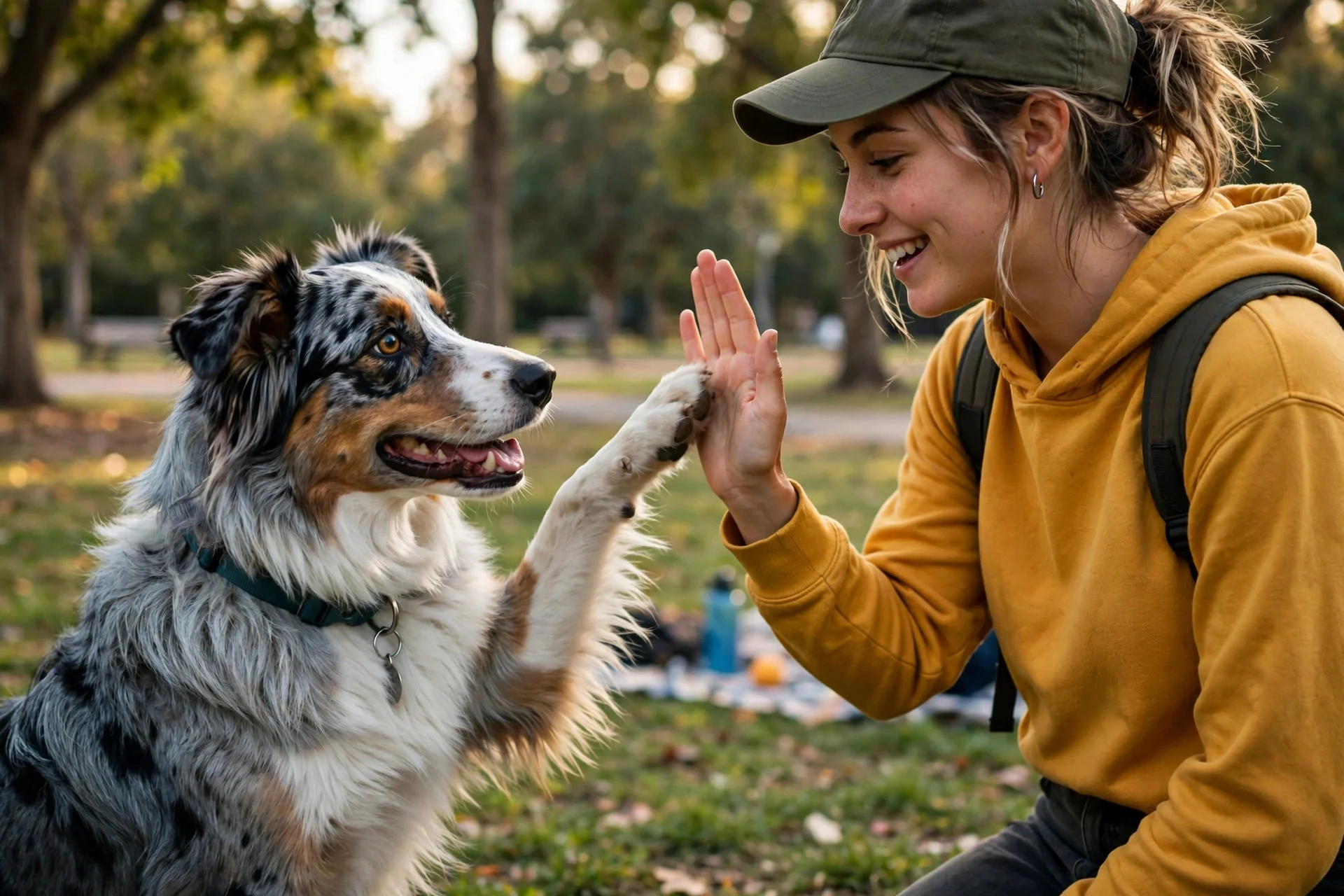
Dog won’t lift the paw at all? Try tickling the back of their leg gently, or practice right after a walk when they’re relaxed. Some dogs — especially larger, less “pawy” breeds — take longer to offer the behavior. Patience and better treats solve most of it.
Dog mouths your hand instead of pawing? They’re over-aroused. Lower the excitement — calm voice, slower movements, train after exercise. And if your dog has started smacking everyone who extends a hand (the classic overgeneralization), go back to rewarding only cued shakes for a week. The precision comes back quickly.
FAQs
What age can puppies learn shake?
As soon as they can sit reliably — usually around 10 to 12 weeks. It’s a great first trick because it’s simple, safe, and builds the dog’s understanding that offering behaviors earns rewards. Keep puppy sessions to 3 minutes max.
My dog only does it when I have treats. What now?
Normal at first. Start rewarding randomly — every second or third rep, then less often — and mix in non-food rewards like praise and petting. But keep paying occasionally forever. Tricks maintained on random reinforcement stay sharper than tricks that go completely unpaid.
Can I teach shake to an older dog?
Absolutely. Older dogs often learn tricks faster than puppies because they have better focus and impulse control. The steps are identical. If your senior dog has arthritis, keep the paw lifts low and brief — adapt the trick to the dog.
Should I teach “shake” before basic obedience?
Tricks and obedience aren’t competitors — they complement each other. But if your dog doesn’t yet know sit, down, and come, prioritize those first. “Shake” is the dessert, not the dinner. That said, there’s no harm in teaching it alongside the basics; it keeps training fun for both of you.
There you go — five steps to the most charming trick in the book. Teach it this week, show it off at the next family gathering, and watch your dog ham it up for the applause. Then teach “high five.” You know you want to.

























