There’s a special kind of joy in walking a dog that actually walks with you — leash loose, dog glancing up at you every few steps, both of you relaxed. And there’s a special kind of misery in the alternative. If you’ve been looking up loose leash walking training, you’re probably living the second version right now. Good news: this is one of the most trainable skills there is.
Loose leash walking isn’t about a perfect heel position. It’s simpler than that: the leash stays slack. Your dog can sniff, look around, and be a dog — as long as they’re not hauling you down the street. This 10-step guide builds the skill from the ground up, indoors first, then out in the real world where the squirrels live.
10 Steps to Loose Leash Walking
1. Start Indoors With No Leash at All
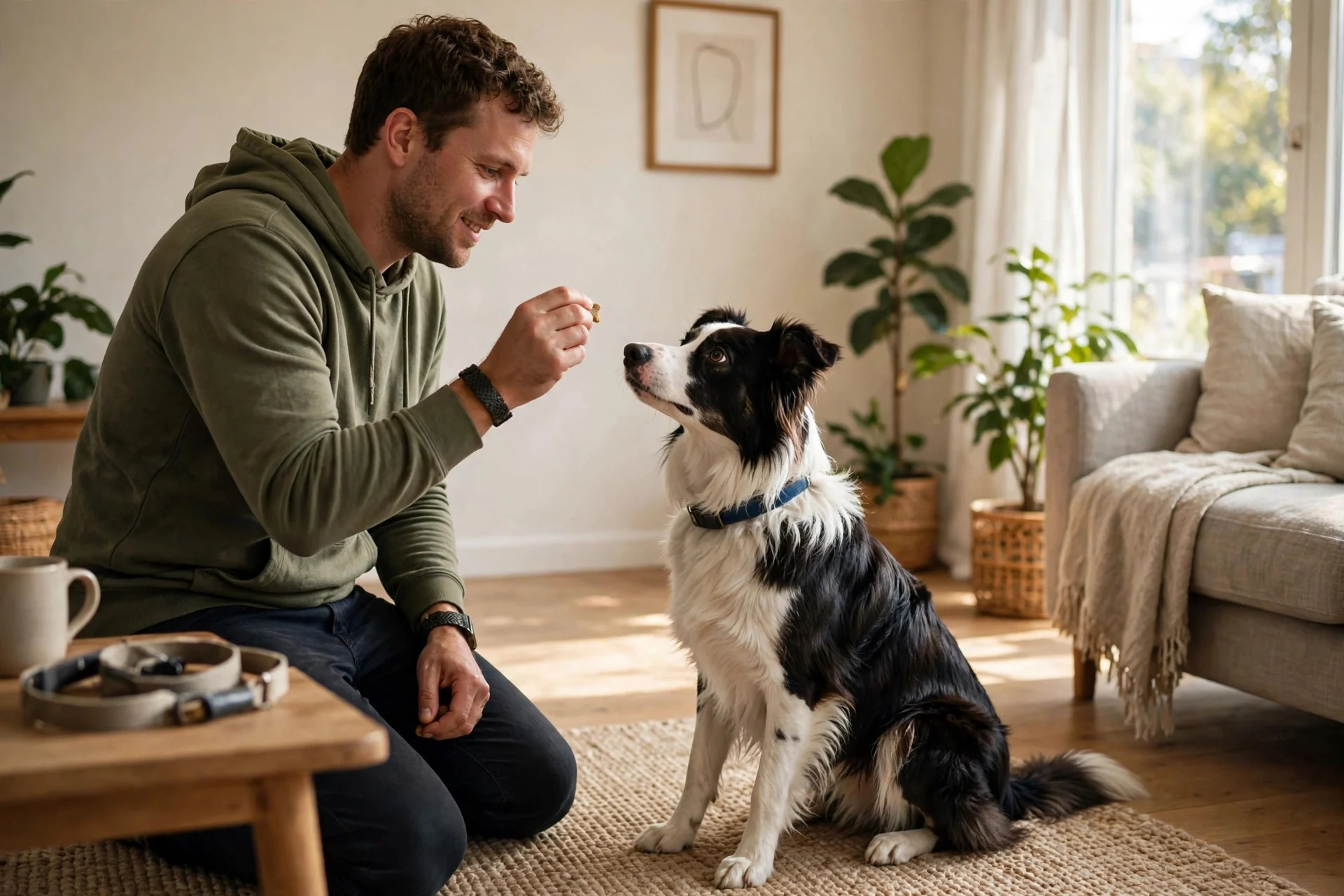
Forget the leash for the first few sessions. In your living room, reward your dog for choosing to be near you. Take a step, and when they follow, mark it with “yes!” and treat. You’re teaching the core idea — staying close to you is profitable — without any equipment complicating things. Do three 5-minute sessions like this. It feels almost too simple, but dogs who learn the position game indoors first pick up leash work dramatically faster.
2. Add the Leash, Change Nothing
Clip on the leash and repeat exactly what you just did. Same room, same game, same treats. Most dogs don’t even notice the leash if the pattern is already familiar. If your dog freezes or chews the leash, they’re not ready — go back to step one for another day. Rushing this stage is like skipping the foundation and wondering why the house wobbles.
3. Teach the “Find Heel” Game
Hold a treat at your left side (or whichever side you prefer) and reward your dog for moving into that spot. Add a cue like “close” once they’re offering the position reliably. Practice in short bursts — 10 to 15 reps, then a play break. Within a week, most dogs will swing into position when they hear the cue. This becomes your reset button for the rest of training: whenever things fall apart on a walk, you can cue “close” and rebuild from there.
4. Take One Step, Then Reward
Now walk. Literally one step. Dog stays with you? Treat at your side. Then two steps. Then three. Build the distance gradually, rewarding in position every few steps. It feels tedious, and it is — for about three days. Then something clicks and the dog starts choosing the position on their own. Keep early outdoor sessions to 5 minutes. You’re building a habit, and habits form through repetition, not marathons.
5. Introduce the Stop-and-Go Rule
The moment the leash tightens, stop. Become boring. Wait for any slack — even a glance back — then move forward and reward. This is the single most important rule of loose leash walking, and the one people break most often because they’re in a hurry. Every time you let the dog pull you forward “just this once,” you’ve taught them that persistence pays. Be the most consistent version of yourself on this one.
6. Add Turns and Pattern Changes
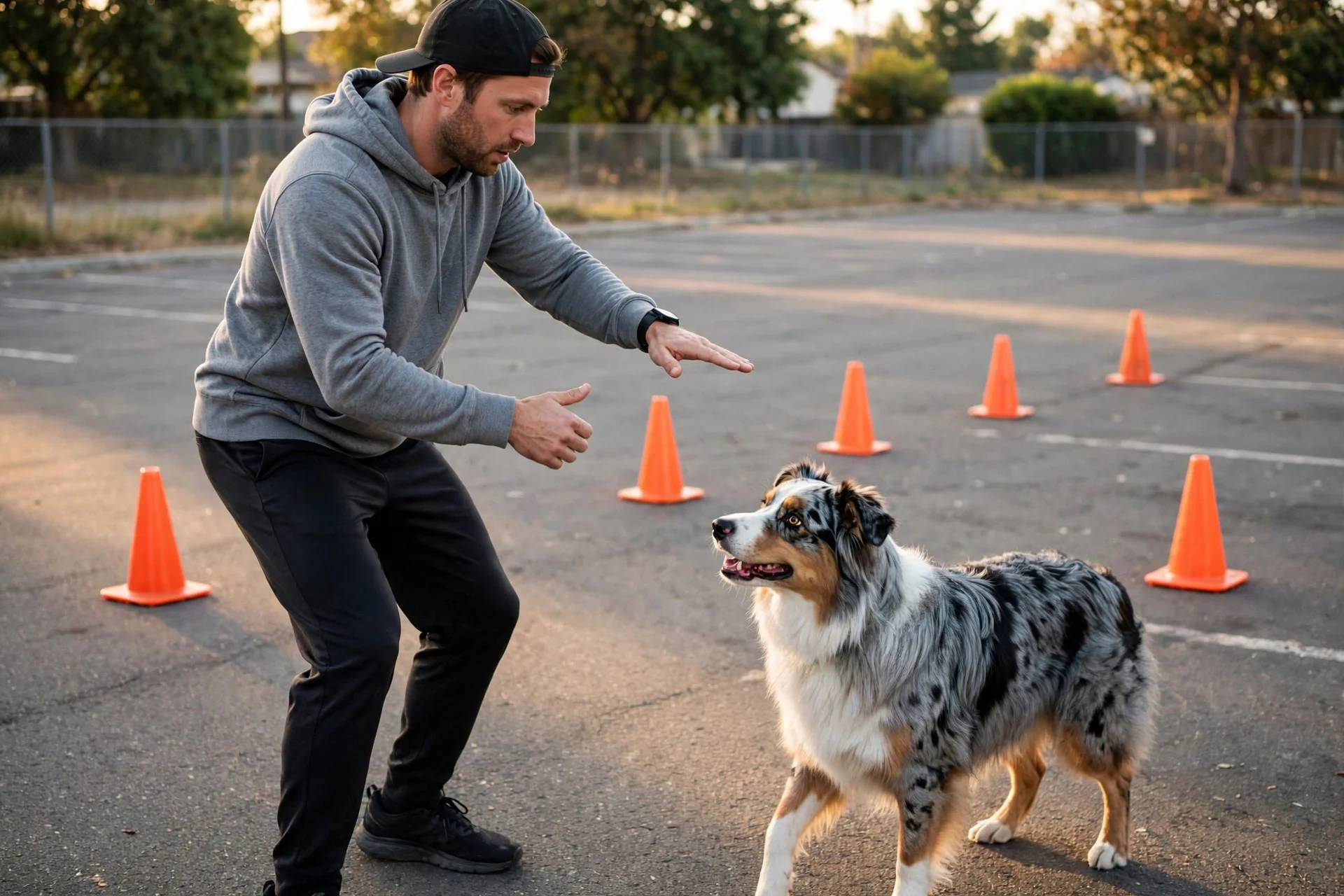
Walking in a straight line is actually hard for dogs — it’s monotonous, so their brain wanders. Mix in turns, figure-eights, and random direction changes in a quiet area. This keeps your dog’s attention on you because you’re unpredictable (in a fun way). Reward them for adjusting with you. Dogs trained with pattern games stay engaged on walks far longer than dogs drilled on straight-line heeling.
7. Train Past Mild Distractions
Once your dog walks nicely in a boring area, add one distraction at a time: a quiet park, a friend standing 30 feet away. Keep sessions short and reward generously. If your dog can’t succeed, the distraction is too close. Increase distance, don’t increase frustration. This step usually takes two to three weeks.
8. Build Duration Between Rewards
Start stretching the gaps: treat every 10 steps, then every 20, then at random intervals. Mix in life rewards too — a sniff break, a quick game of tug. The goal is a dog who walks politely because it’s become their default. But don’t fade rewards entirely in the first two months.
9. Practice the Hard Stuff: Other Dogs and Squirrels
Find the distance where your dog notices another dog but can still respond to you — that might be half a block. Reward calm behavior there across multiple sessions, then shrink the distance gradually. Rushing this creates leash reactivity. Done slowly, it creates a dog who can pass another dog on a narrow sidewalk without drama.
10. Proof It in Real Life
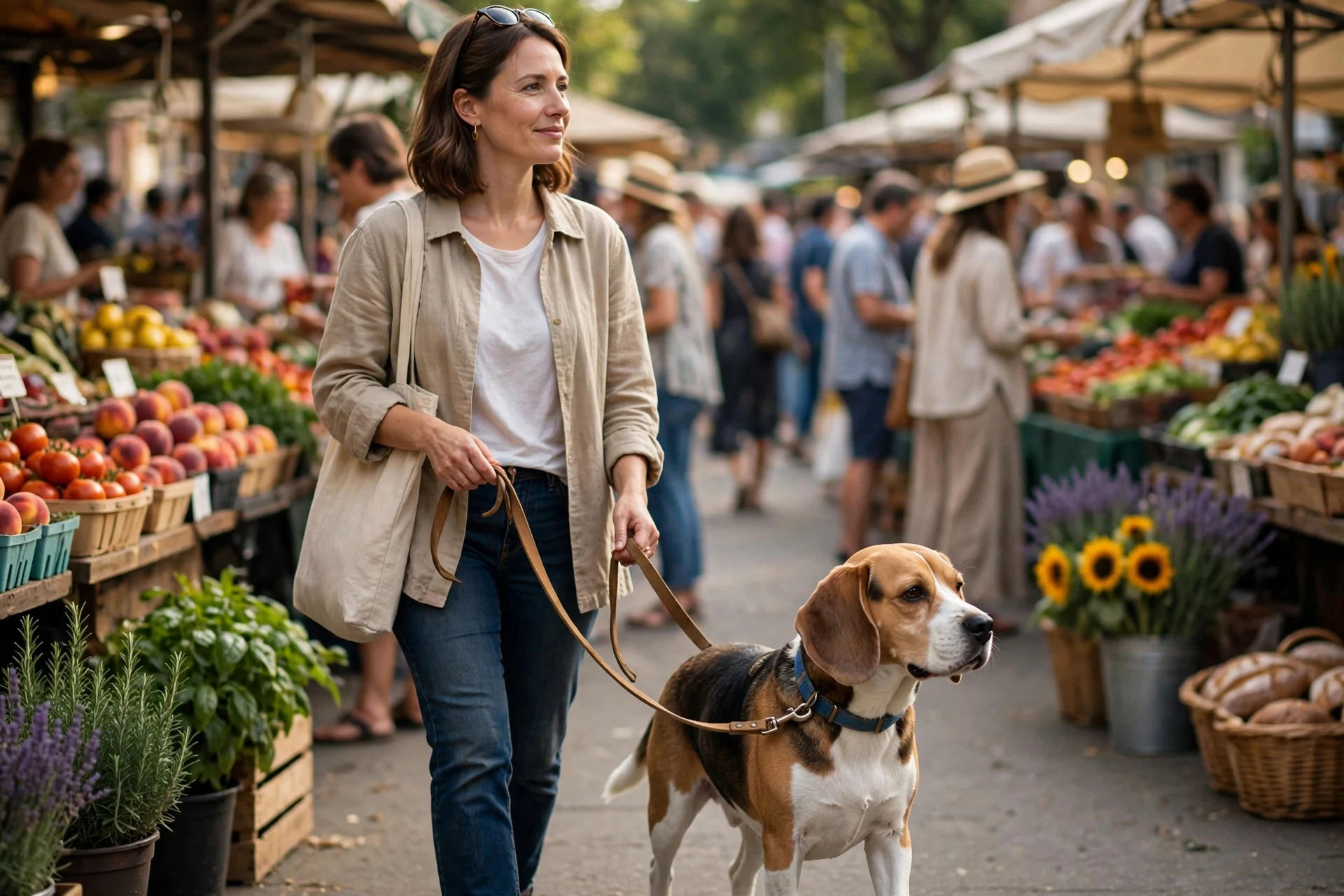
The final step is just living with it: normal routes, pet stores, farmers markets. Bring treats but use them less. If behavior degrades somewhere new, that’s information, not failure — do shorter sessions with more rewards there for a few days. Most dogs need two to three months of consistent practice for a fully proofed walk.
Setting Up for Success
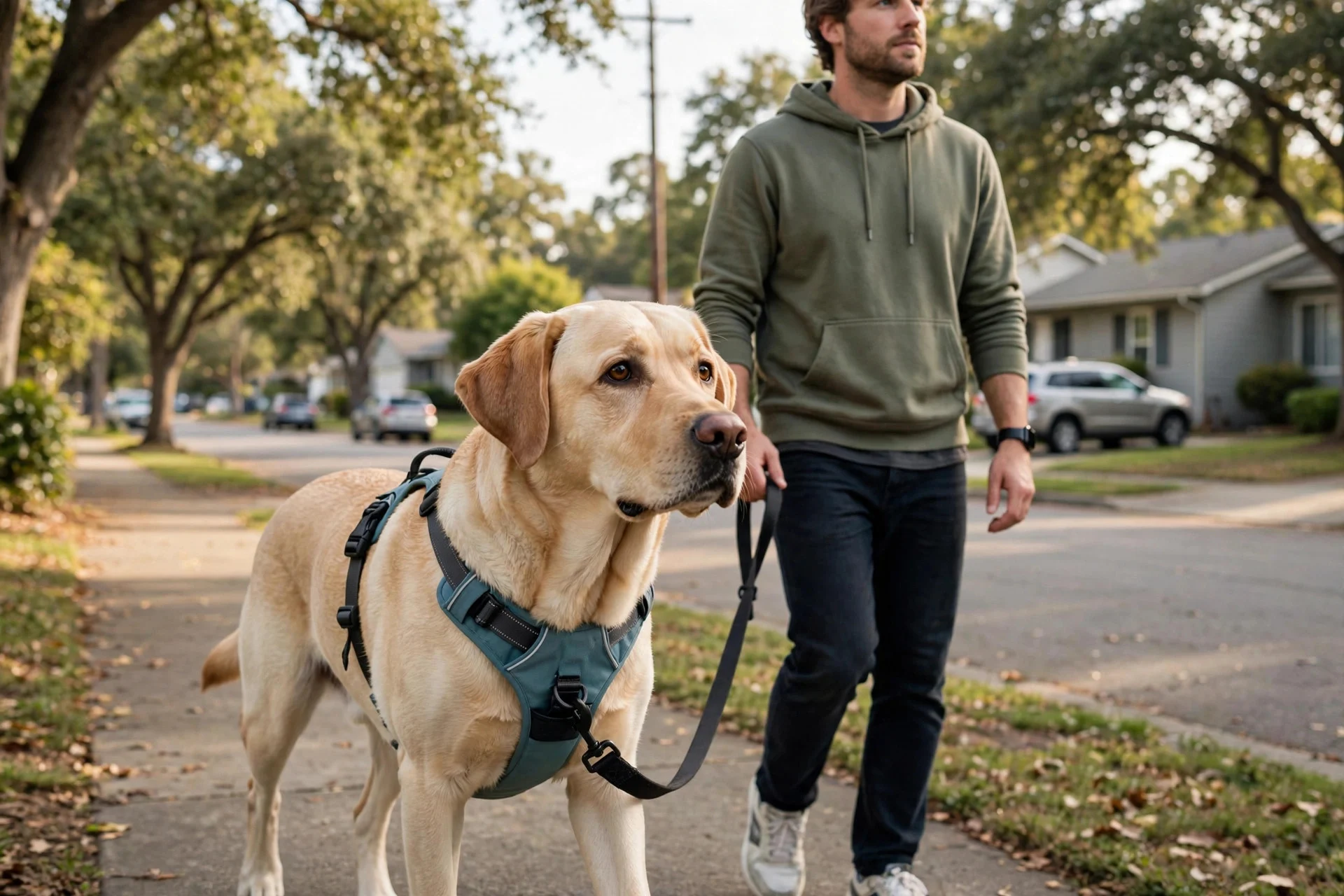
Gear matters: a front-clip harness gives you steering without pain, and a 6-foot leash gives room to move without slack to build momentum. Use treats your dog genuinely loves, cut pea-sized — and upgrade to the good stuff (real chicken, cheese) in distracting environments. Train when your dog is settled, not bursting with energy; a 10-minute play session beforehand puts their brain in learning mode.
Common Mistakes
The biggest one is training only on “real” walks when you’re trying to get somewhere. It’s fine to have separate decompression walks (long line, sniffing encouraged, no rules beyond safety) — that honesty beats half-hearted training that teaches the dog your rules are optional.
Also avoid correcting the dog back into position with leash pops. If your dog shuts down, lies down, or stops taking treats, you’re pushing too hard. Shorten the session, lower the difficulty, end with something easy.
FAQs
How is this different from heeling?
Heel is a precise obedience position — dog’s shoulder at your leg, eyes up, no sniffing. Loose leash walking is casual: the dog can wander within the leash’s range, sniff, and relax, as long as there’s no tension. For 99% of owners, loose leash is the actual goal. Save formal heeling for sport or crowded situations.
My dog is 80 pounds and I’m not that strong. Can I still do this?
Yes — that’s exactly why the method works. You’re not out-muscling the dog; you’re teaching them that pulling never works. The front-clip harness gives you mechanical advantage while you train. Many small owners successfully train very large dogs this way. Strength was never the point.
Should walks be only training, or can my dog just be a dog sometimes?
Both. Designate some walks as training walks (short, focused, treat-heavy) and others as decompression walks (long line, sniffing encouraged, no rules beyond safety). Dogs who get both learn faster, because they’re not starved for the things training restricts.
What if my dog only walks nicely when I have treats visible?
That’s a fading problem, not a training failure. Hide the treats in a pouch, reward randomly instead of visibly, and mix in life rewards. Over two to three weeks, shift from “treat every time” to “treat sometimes, surprise sniff break other times.” The behavior stays because the history of reinforcement is strong.
Loose leash walking is a conversation, not a command. Teach your dog that staying connected to you is the best strategy on every walk — and the leash becomes what it was always supposed to be: a safety backup, not a tug-of-war rope.