
Your puppy is adorable. Your puppy is also a tiny land shark whose needle teeth have turned your hands into hamburger. If you’re googling how to stop puppy biting at 1 a.m. while icing your fingers, welcome — every puppy owner has been exactly where you are.
Here’s the reassuring part: puppy biting is normal. Puppies explore the world with their mouths, and they learn bite inhibition — how to control jaw pressure — through feedback. Your job isn’t to punish the biting out of them. It’s to teach them that human skin is fragile and that gentle mouths earn good things. These seven methods work because they speak puppy, not human.
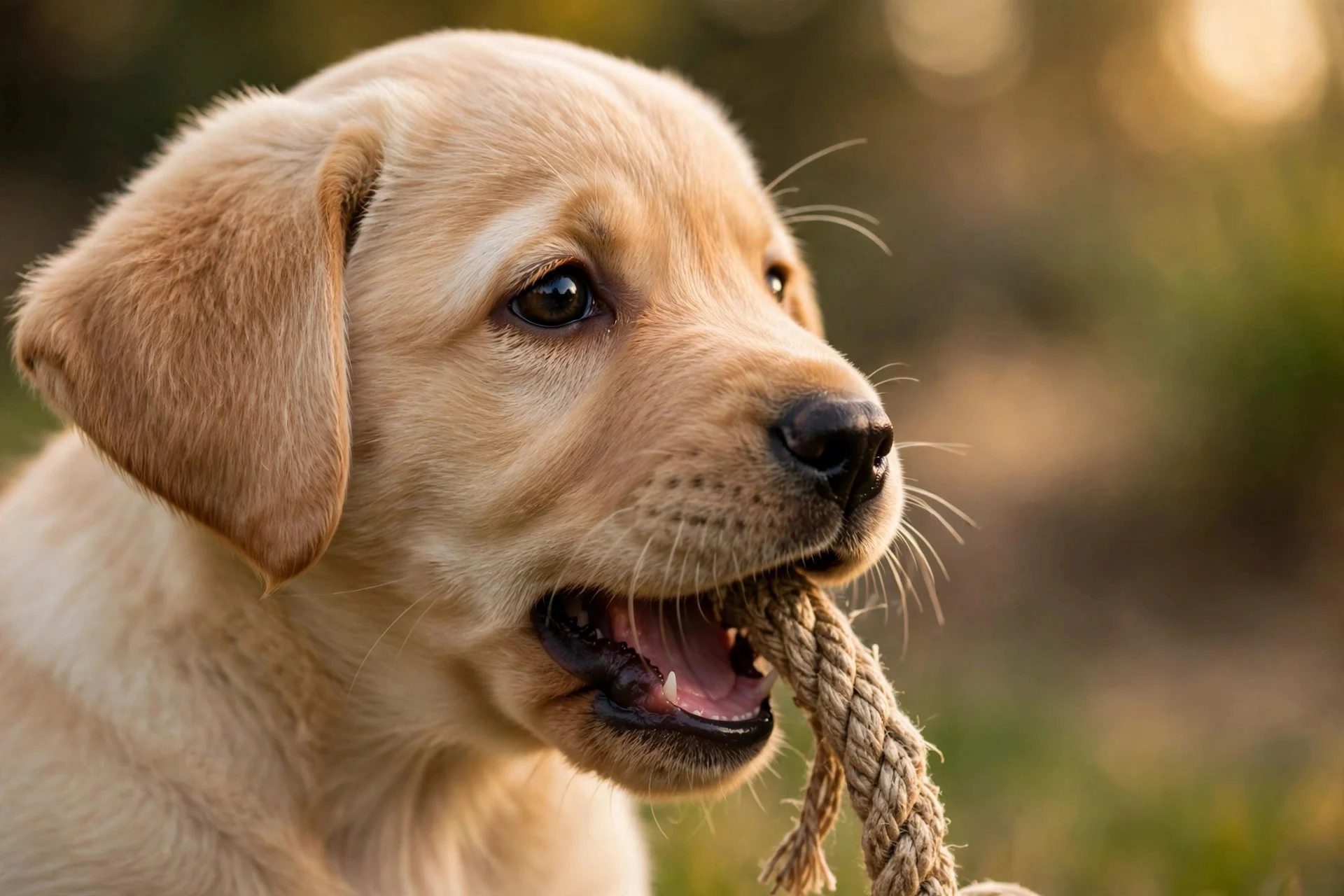
7 Ways to Stop Puppy Biting
1. Yelp and Withdraw (Speak Their Language)
When puppies play too rough with each other, the bitten pup yelps and stops playing. Do the same: the moment teeth touch skin, give a high-pitched “ow!” and immediately stop all interaction for 20 to 30 seconds. Turn away, tuck your hands under your arms, become boring. Then resume play. Most puppies get the message within a week: hard biting ends the fun. Note — this works best for puppies under 14 weeks. Older pups sometimes get more excited by the yelp, in which case move to method two.
2. Trade Skin for Toys (Every Single Time)
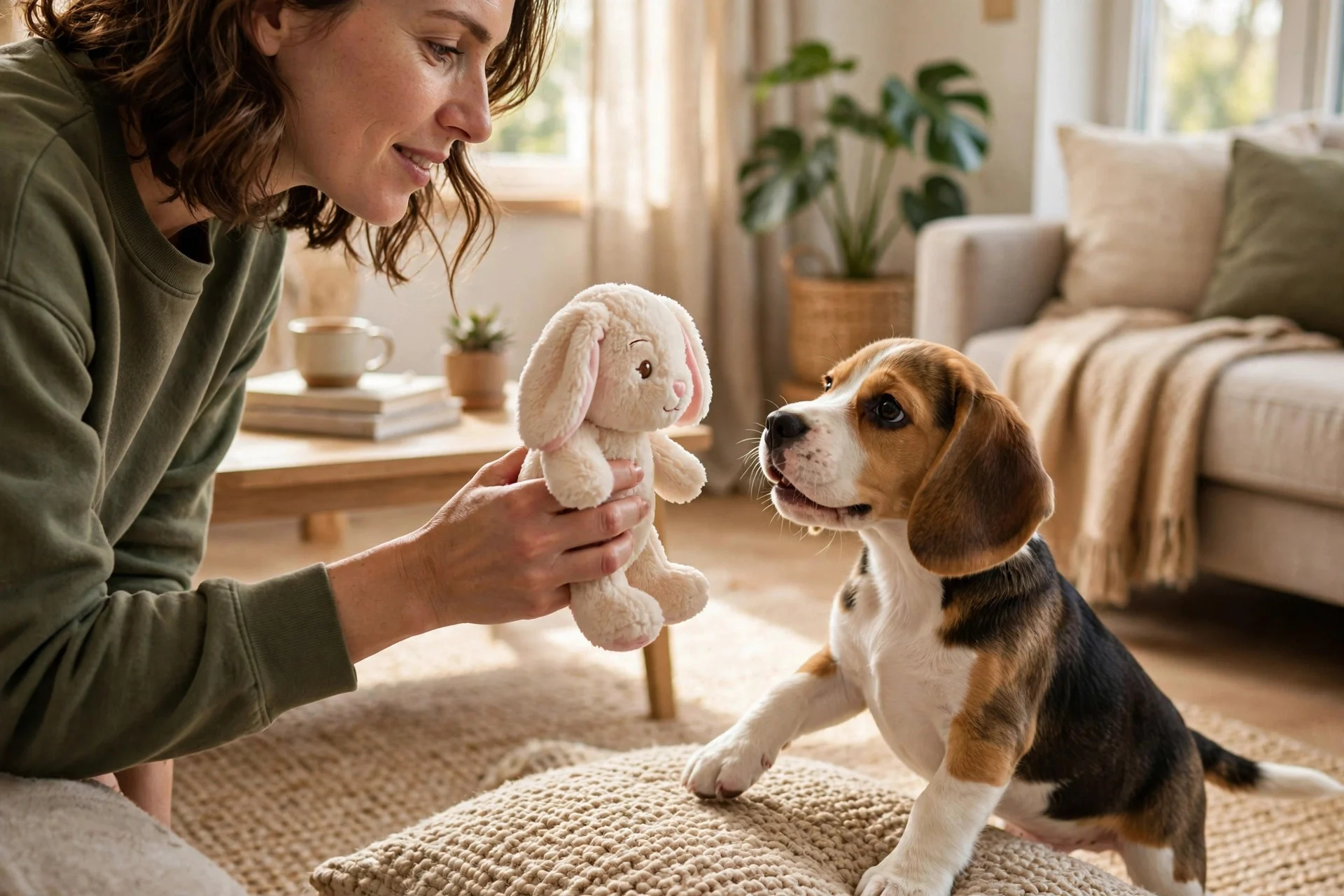
Keep a toy within arm’s reach at all times during the land-shark phase. The instant your puppy goes for your hand, redirect to the toy with enthusiasm — wiggle it, make it interesting, praise the puppy for grabbing it. You’re not just stopping the bite; you’re teaching them what to bite instead. This is the highest-leverage habit in the whole list. Puppies who learn “toys are for chewing, hands are not” in the first month rarely have biting problems later. Buy the cheap rope toys in bulk. You’ll go through them.
3. Enforce Naps Like a Drill Sergeant
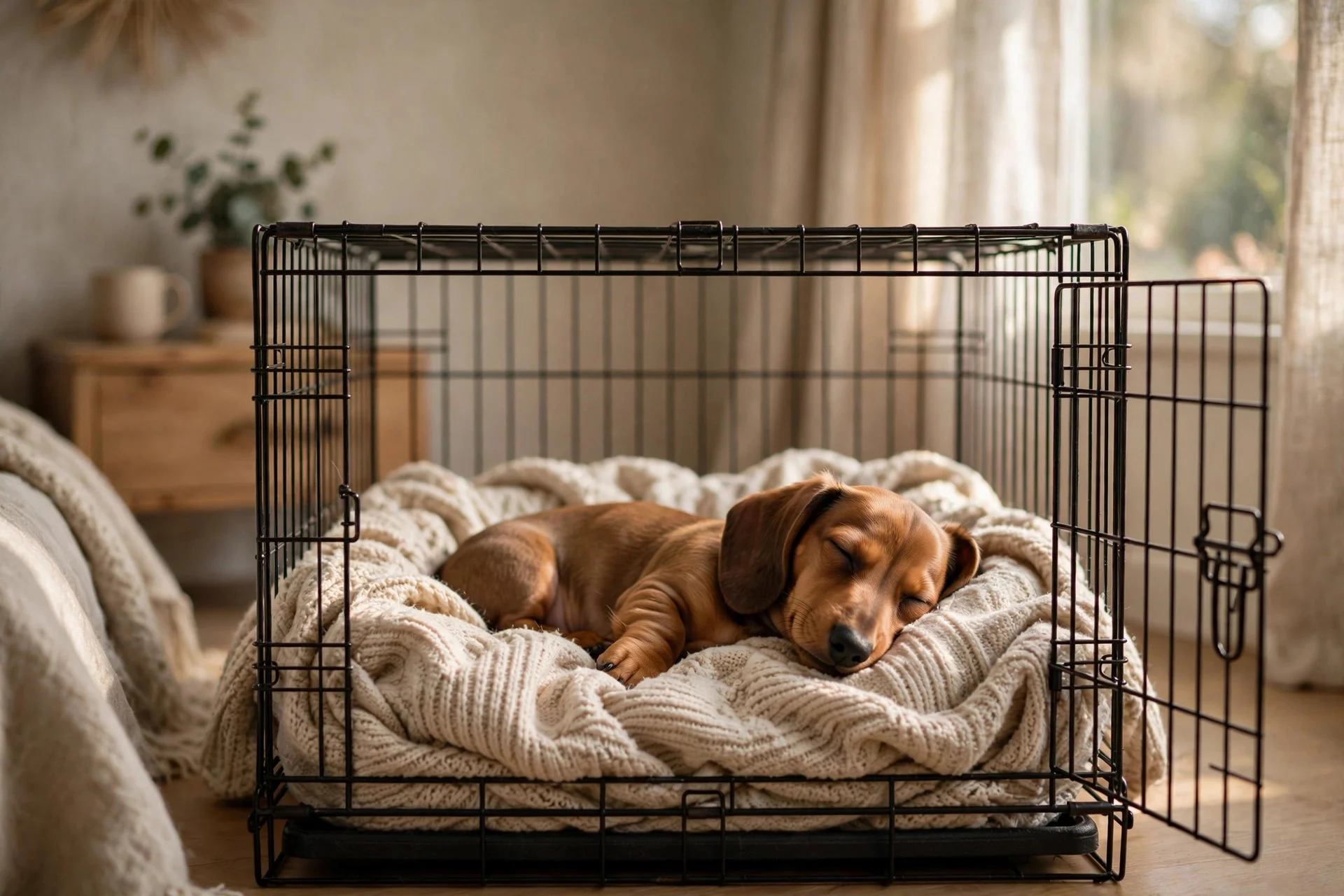
Here’s the secret most biting articles bury: an overtired puppy bites ten times more than a rested one. Puppies need 18 to 20 hours of sleep a day, and they will not put themselves to bed — they’ll just get wilder. If your puppy turns into a demon around the same time every evening, that’s not a behavior problem, that’s exhaustion. Crate or pen them for enforced naps every 1 to 2 hours of awake time. The biting often drops by half within days of fixing the sleep schedule alone.
4. Reward Gentle Mouthing
Don’t try to eliminate all mouth contact at once — teach gradations. When your puppy mouths softly without pressure, mark it with a calm “good” and keep playing. When they bite harder, use the yelp-and-withdraw from method one. You’re shaping bite inhibition in stages: first they learn “no hard bites,” then later “no teeth on skin at all.” This staged approach is how puppies naturally learn from their littermates, and it produces adult dogs with reliably soft mouths.
5. Freeze Instead of Pulling Away
Your instinct when teeth clamp down is to yank your hand back. Don’t — fast movement triggers chase and grip reflexes, and the puppy bites harder. Instead, go still. Make your hand a dead, boring thing. Most puppies release within a few seconds when the “toy” stops being fun. Then redirect to an actual toy. This feels completely unnatural the first dozen times. It works anyway.
6. Teach “Leave It” as an Emergency Brake
A solid “leave it” gives you a verbal tool for the moments when redirection isn’t fast enough. Train it separately with treats first: show a treat in your closed fist, and the moment your puppy backs off, mark and reward from your other hand. Practice until it’s snappy, then start using it for hands, sleeves, and pant legs. Five minutes of “leave it” practice a day pays off enormously during the peak biting weeks (usually 10 to 16 weeks old).
7. Know When It’s Not Normal Anymore
Normal puppy biting is loose, wiggly, and paired with play bows — the puppy’s body is soft and happy. Concerning biting is stiff-bodied, with hard staring, growling over resources, or breaking skin regularly past 5 months old. If the biting escalates instead of improving by 6 months, or if it’s paired with genuine aggression signals, stop guessing and call a certified professional dog trainer or behaviorist. Early intervention with real aggression is always easier than late intervention.
The Timeline: When Does It End?
For most puppies, biting peaks between 8 and 16 weeks, improves noticeably by 5 months, and is largely gone by 6 to 7 months when adult teeth finish coming in. Teething (around 4 to 6 months) causes a temporary resurgence — that’s pain, not defiance, so offer frozen carrots, frozen washcloths, and appropriate chews.
Work on this daily but in short bursts. Puppies learn bite inhibition through hundreds of tiny feedback moments, not single dramatic corrections. And if your puppy ever shuts down during training — cowering, avoiding you, refusing to play — you’re being too harsh. Biting work should be 95% redirection and management, 5% feedback. Never hit, alpha-roll, or hold a puppy’s mouth shut. Those methods create fear biters, which is infinitely worse than a mouthy puppy.
Mistakes That Make Biting Worse
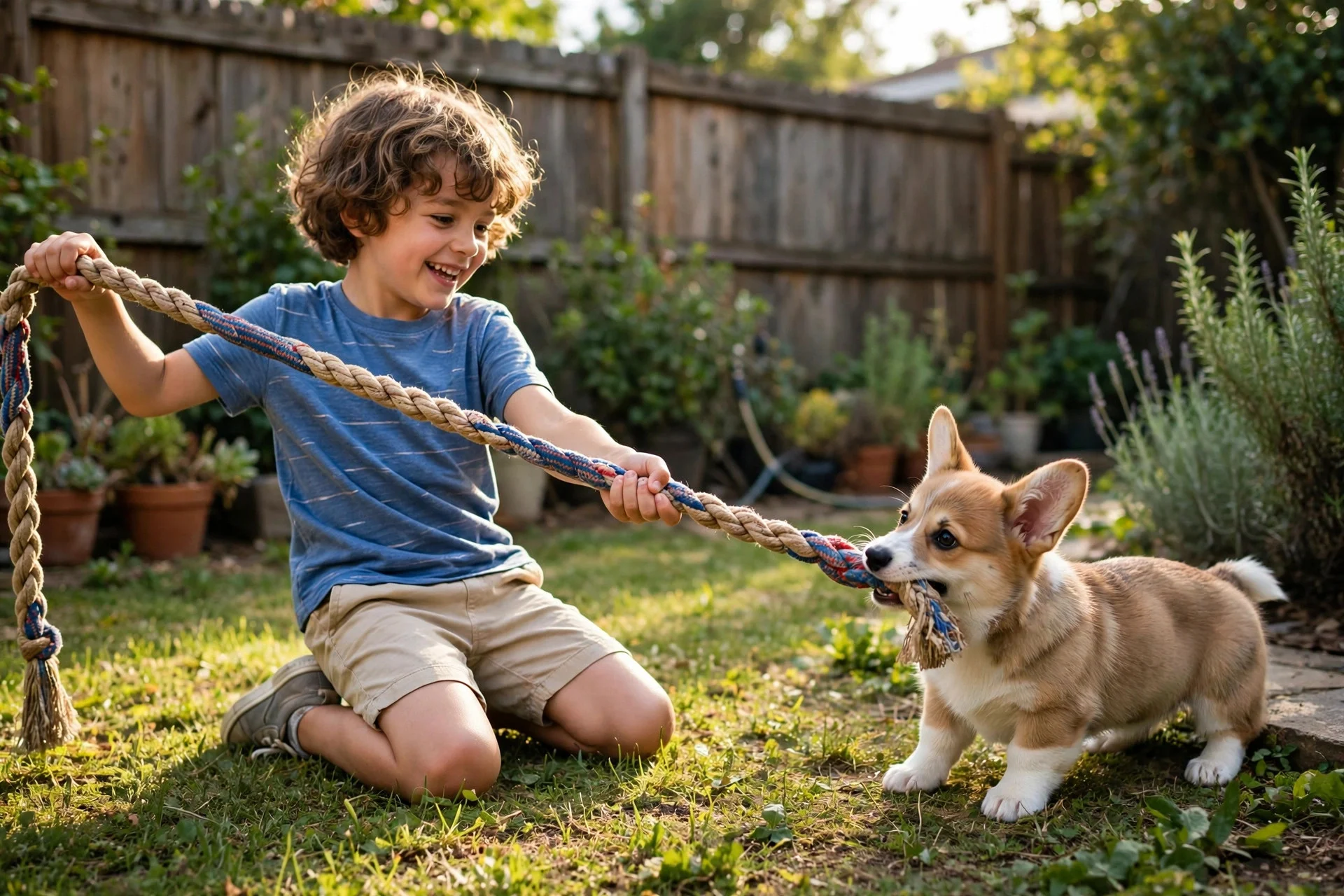
Roughhousing with your hands teaches the puppy that hands are toys. It’s fun when they’re 8 pounds; it’s a problem when they’re 60. Always wrestle with a toy between you and the puppy. Similarly, letting kids squeal and run when the puppy chases just supercharges the behavior — teach kids to “be a tree” (stand still, arms crossed) when the puppy gets mouthy.
Another big one: inconsistent rules between family members. If one person allows mouthing “because it’s cute” while another corrects it, the puppy learns nothing except confusion. Get everyone on the same page in week one. Print the rules and stick them on the fridge if you have to.
FAQs
Should I bite my puppy back or hold their mouth shut?
No, and no. These old-school methods are based on a misunderstanding of how dogs learn. They don’t teach bite inhibition — they teach the puppy that humans are scary and unpredictable, which can create defensive biting later. Redirection and feedback work better and don’t damage your relationship.
My puppy bites my kids more than me. What do I do?
Kids are more exciting targets — they move fast, squeal, and are closer to puppy height. Supervise all kid-puppy interactions, teach kids the “be a tree” freeze, and give the puppy an approved chew during kid playtime. Never leave a mouthy puppy unsupervised with small children, no matter how sweet the puppy is.
Do bitter apple sprays work?
Sometimes, as a supplement — never as the main strategy. Some puppies are deterred by the taste on hands or furniture; others seem to enjoy it. If you try it, test it first (dab some on and offer it — if the puppy licks it happily, it’s not a deterrent for them). It doesn’t teach anything on its own.
My 7-month-old still bites hard. Is something wrong?
By 7 months, hard biting should be rare. If it’s not improving, look at exercise, sleep, and whether the whole household has been consistent. If everything checks out and the biting is intense or escalating, get a professional evaluation. True aggression is uncommon in puppies but real when it happens, and early help matters.
Almost every adult dog you admire — the calm ones, the gentle ones — was once a tiny shark drawing blood. They learned, and yours will too. Stay consistent, protect your sleep schedule, keep toys everywhere, and remember: this phase is temporary. Your fingers will survive.

























