
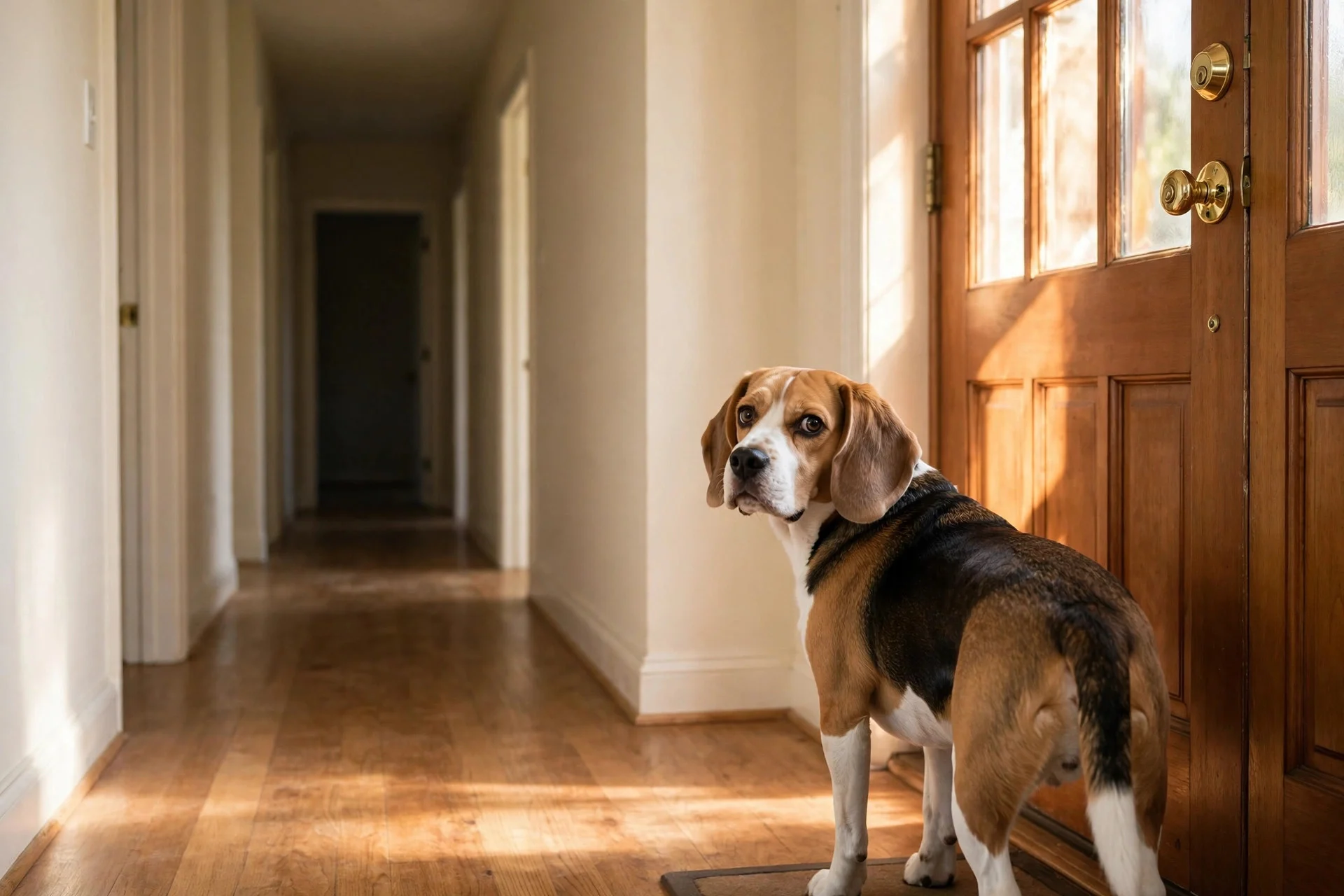
You set up a camera to check on your dog during lunch. What you see ruins your afternoon: pacing, whining, scratching at the door, and by the time you’re home, a shredded couch cushion. That’s not a badly behaved dog. That’s a panicking dog. If you’re researching separation anxiety dogs training, the first thing to know is that punishment will only make it worse — your dog isn’t doing this to spite you.
Separation anxiety is a genuine distress response, closer to a panic attack than disobedience. The dog isn’t choosing to destroy things; their brain is flooding with stress hormones the moment you leave. The good news: with patient, gradual training, most mild-to-moderate cases improve significantly. Severe cases need professional help — and there’s no shame in that. Let’s start with what you can do at home.
10 Training Tips for Separation Anxiety
1. Confirm It’s Actually Separation Anxiety
Not all alone-time destruction is anxiety. Boredom, incomplete house training, and barrier frustration look similar. The telltale signs of true separation anxiety: distress starts within minutes of departure (check with a camera), and the behaviors — vocalizing, drooling, escape attempts, house soiling — happen only when alone, never when you’re home. A dog who shreds pillows at 2 a.m. while you sleep has a different problem than one who panics the moment your car leaves the driveway. Get the diagnosis right before training, or you’ll train the wrong thing.
2. Desensitize Your Departure Cues
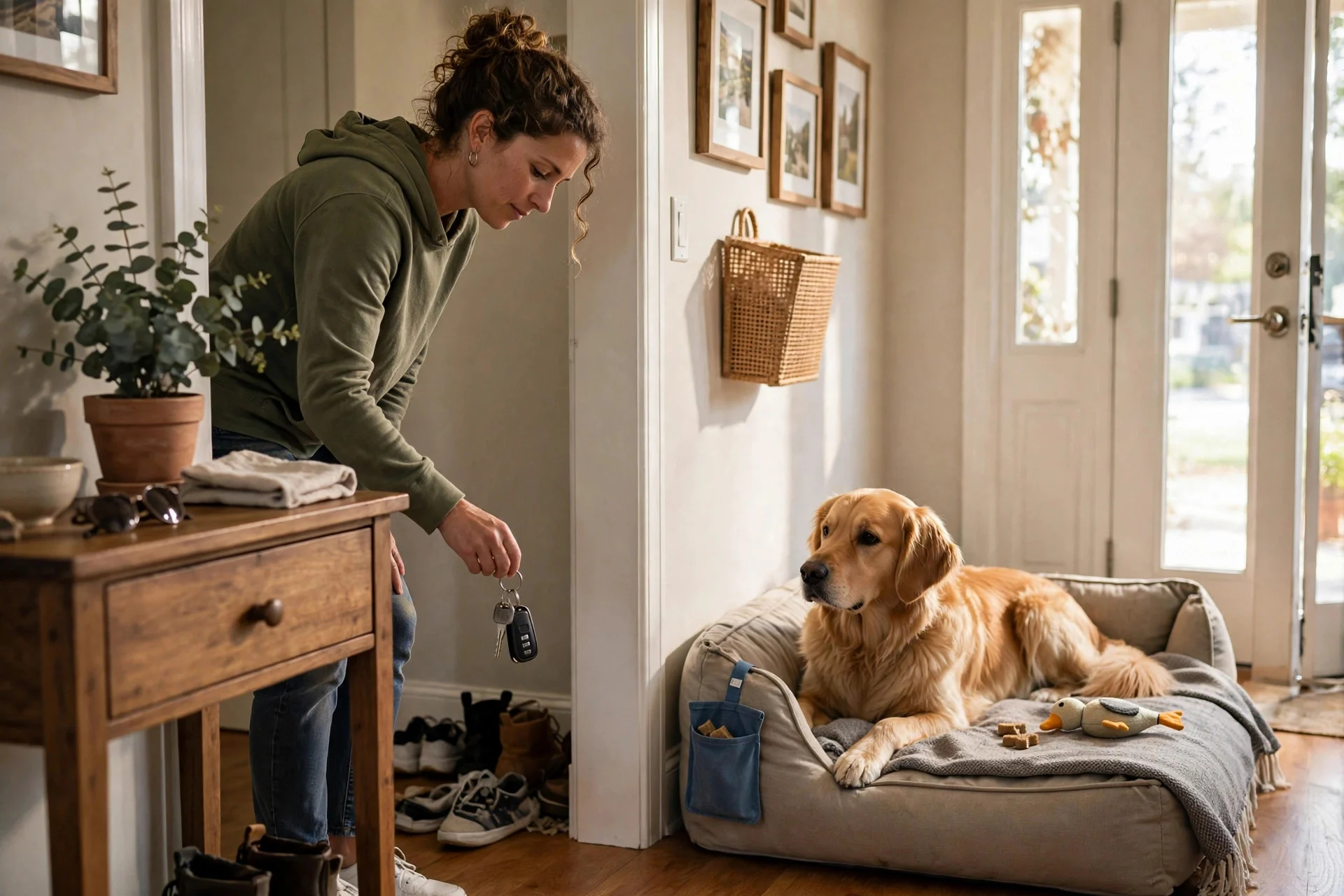
Your dog has learned that keys jingling and shoes going on predict abandonment — so the panic starts before you leave. Break the association: pick up your keys and sit back down. Put on your coat and make coffee. Do these 10 to 15 times a day with no departure attached. Within a week or two, the cues lose their power. It feels silly. It works anyway.
3. Practice Absences in Seconds, Not Hours
Step outside for 5 seconds, come back before your dog panics, reward calm. Then 10 seconds. Then 30. Then a minute. Always return before the anxiety spikes. You’re building a history of “you left and came back and it was fine” — hundreds of tiny reps. Most people rush this step and blow up weeks of progress in one long absence. Slow is fast here.
4. Make Departures and Arrivals Dead Boring
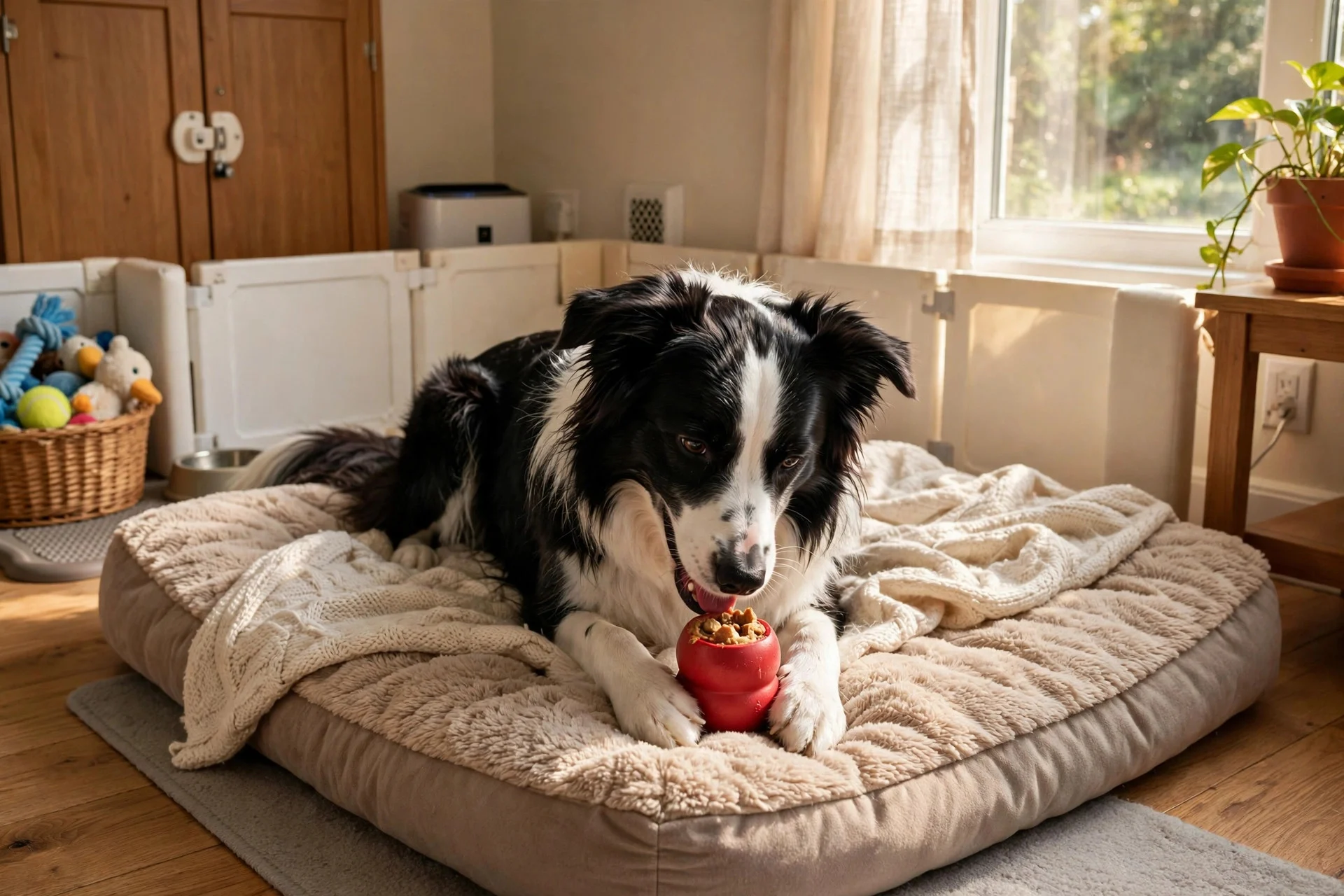
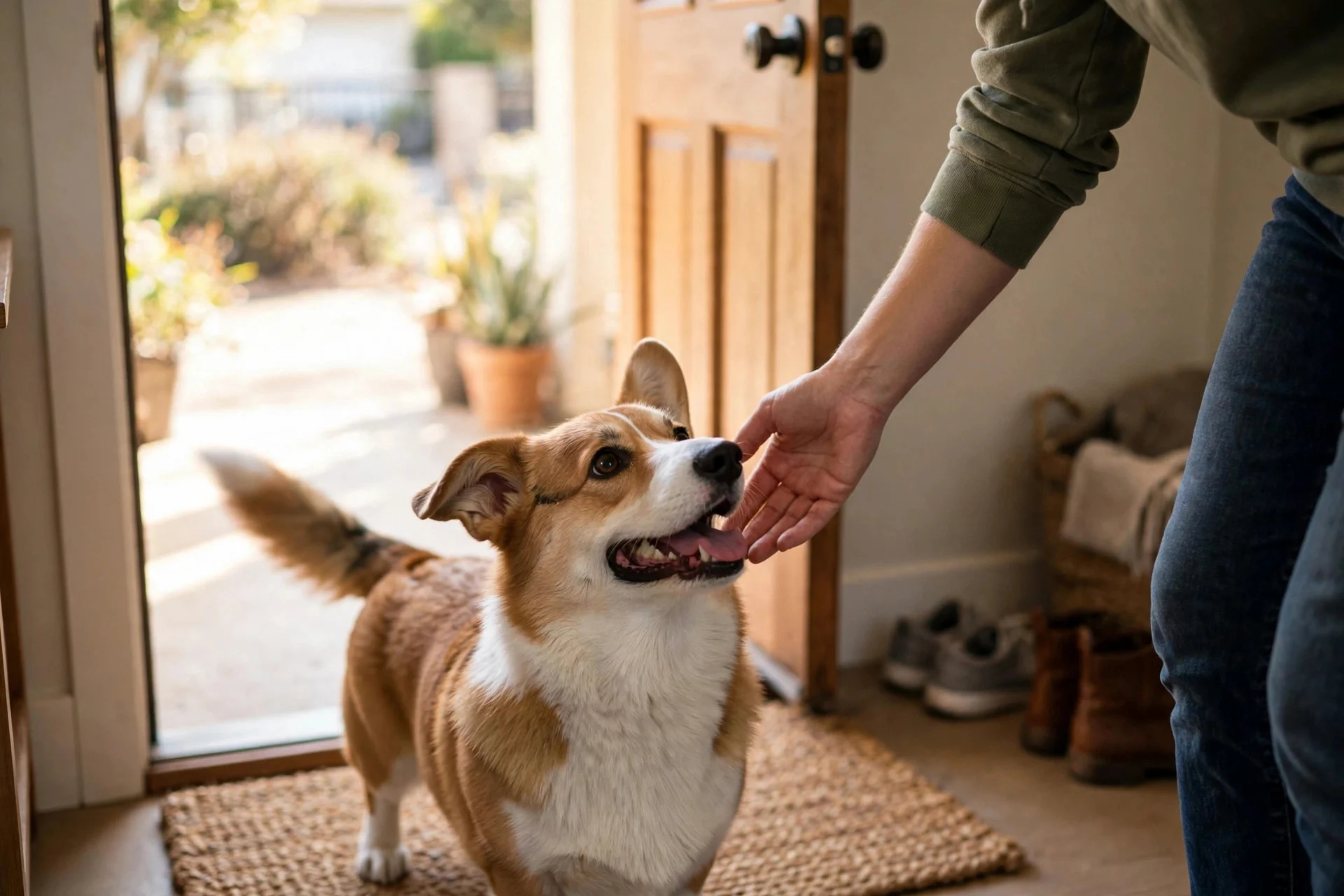
Long emotional goodbyes tell your dog that leaving is a big deal. Keep it to a calm “see you later,” a stuffed Kong tossed on the bed, and out the door. Arrivals: ignore the frantic greeting for the first minute or two, then greet calmly once they’ve settled. You’re modeling the emotional tone you want — departures are unremarkable, returns are unremarkable. The drama has to drain out of both ends.
5. Build Independence While You’re Home
Start rewarding independent behavior: toss a treat when they choose their bed over your feet. Practice brief separations inside — step behind a door for 10 seconds, return, reward calm. Teach a solid “place” command. Independence is a muscle; give it light workouts all day.
6. Exercise Before Alone Time (But Not as a Cure)
A 30-minute walk before you leave takes the edge off. But exercise alone doesn’t fix anxiety — a tired anxious dog is just a tired anxious dog. Think of it as lowering the starting stress level so training has a better chance. Pair it with a frozen Kong at departure so the first 20 minutes alone are occupied with something pleasant.
7. Create a Consistent Alone-Time Routine
Anxious dogs do better with predictability: same departure ritual, same safe space, same background noise. Some dogs do better in a crate, others panic more when confined — know your dog. If confinement increases the panic, use a dog-proofed room instead.
8. Never Punish Anxiety Behaviors
This one can’t be overstated. Punishing a dog for panicking is like yelling at someone for having a panic attack — it adds fear on top of fear and usually makes the destruction worse. Coming home to a destroyed couch and scolding the dog teaches them nothing except that your return is also scary now. Clean up calmly, review your training plan, and adjust. The dog is suffering, not misbehaving. Let that reframe everything you do.
9. Consider Calming Aids as Support (Not Solutions)
Adaptil diffusers, calming music, anxiety wraps — these can take the edge off mild cases. For moderate to severe anxiety, talk to your vet about anti-anxiety medication. There’s no prize for doing it drug-free, and for some dogs, medication is what makes training possible at all. A good vet will treat this as the medical issue it is.
10. Know When to Call a Professional
If your dog injures themselves trying to escape, breaks out of crates, or shows no improvement after 4 to 6 weeks of consistent work, get help. Look for a Certified Separation Anxiety Trainer (CSAT) — they work remotely and specialize in exactly this — or a veterinary behaviorist for severe cases. Severe separation anxiety is one of the most treatable behavior problems with professional guidance, and one of the most frustrating without it. Asking for help is the responsible move, not a failure.
What Progress Looks Like
Mild cases — whining for a few minutes, then settling — often improve in 3 to 6 weeks. Moderate cases typically take 2 to 4 months. Severe cases can take 6 months or more, usually with medication and professional support. Track progress with a camera, not your feelings: “settled after 8 minutes instead of 25” is data. If your dog shuts down during training — refusing food, trembling — you’ve pushed too far. Drop back to easier absences.
Management While You Train
Training takes weeks, but you still have to go to work tomorrow. In the meantime: doggy daycare a few days a week, a midday dog walker, or arranging for someone to be home prevents your dog from practicing panic — every full panic episode sets training back. And don’t get a second dog “to keep them company.” It occasionally helps, but more often you end up with two anxious dogs. Fix the anxiety first.
FAQs
Will my dog ever be okay alone for a full workday?
Many do get there — but build up to it honestly. An 8-hour absence is an advanced skill. Most recovered dogs handle it fine once they’ve worked through the program, especially with a midday break. Don’t leap from 30 minutes to 8 hours and hope for the best.
Is crate training good or bad for separation anxiety?
It depends entirely on the dog. Some anxious dogs feel safer in a den-like crate; others panic harder when confined. Test it with a camera: if the dog settles in the crate, great. If they frantically try to escape, the crate is making it worse — use a dog-proofed room instead.
My vet suggested medication. Does that mean I failed?
Not even slightly. Separation anxiety involves brain chemistry, and for moderate-to-severe cases, medication plus training outperforms training alone in every study we have. Think of it like glasses — it corrects something so the dog can function and learn.
Can separation anxiety develop suddenly in an older dog?
Yes, and it warrants a vet check first. Sudden-onset anxiety in a senior dog can signal pain, cognitive decline, or vision/hearing loss. Rule out medical causes before assuming it’s behavioral — especially if the dog was previously fine alone.
Your dog isn’t giving you a hard time — they’re having a hard time. That shift in perspective changes everything about how you train. Go slow, stay below the panic line, celebrate the small wins (eight calm minutes is a victory), and get help when you need it. Most of these dogs get better. Yours can too.

























